This professional guide is compiled by the R&D team of Haofeng (Tianjin) Intelligent Manufacturing Co., Ltd. (brand: AIHOFEN), a leading provider of thermal forming equipment with industry experience dating back to 1995. A disposable cup making machine is a core automated thermal forming equipment widely used in the food packaging industry, playing a key role in solving pain points such as low production efficiency, unstable product quality and high labor costs in disposable container manufacturing. However, many engineers, procurement specialists and industry practitioners still have cognitive misunderstandings about its working principle, classification, application scenarios and selection criteria. In this guide, we combine practical experience from over 100 global client projects to explain the core definition, working principle, main types, industry applications, international standards and common misconceptions of disposable cup making machines, to help you build a systematic and professional understanding for sourcing from Chinese disposable cup machine factories.

Core Definition and Industry Positioning
According to the China Plastic Machinery Industry Association, a disposable cup making machine is a fully automated thermal forming equipment that processes thermoplastic sheets into disposable plastic cups, bowls, boxes and other packaging containers through integrated processes of heating, forming, punching and stacking. In simple terms, it replaces traditional manual cup production to achieve end-to-end manufacturing from raw plastic sheet to finished cup, addressing the limitations of low efficiency and high defect rates in manual production.

As a core equipment for the disposable food packaging industry, disposable cup making machines are an indispensable support for industrial upgrading, with three core advantages:
1. Full-process automation: reduces reliance on manual labor for feeding, forming, cutting and stacking
2. High-precision forming: ensures uniform wall thickness and stable product quality
3. High production capacity: meets the demands of large-scale container manufacturing
Comparison with Traditional Production Solutions
| Technical Indicator | Disposable Cup Making Machine | Traditional Manual Production Line | Conventional Fixed-Mold Cup Machine |
|---|---|---|---|
| Forming Accuracy | ±0.05mm | ±2mm | ±0.2mm |
| Max Daily Capacity | 1.188 million cups | 20,000 cups | 300,000 cups |
| Operators per Shift | 2 | 6+ | 4 |
| Product Defect Rate | <1% | 8-10% | 3-5% |
Core Working Principle
In simple terms, a disposable cup making machine works by heating plastic sheet to a pliable state, forming it into the shape of a cup, cutting the finished product from the sheet, and stacking cups automatically. The professional workflow can be broken down into 5 core steps:
1. Servo Feeding: servo motor chain drive with automatic deviation correction and tension control, ensuring stable, high-precision sheet feeding
2. Zoned Heating: tunnel-type upper and lower heating furnace with imported heating elements, independent temperature control per zone for even heating
3. Forming: either fixed-mold positive pressure forming or flip-mold conjugate cam forming, depending on machine type
4. Punching & Cutting: synchronized upper and lower mold knife edge cutting to separate finished cups from remaining sheet material
5. Automatic Stacking: robotic suction arm picks up finished cups, stacks, counts and outputs them for packaging
Main Machine Types and Application Scenarios
There are three mainstream types of disposable cup making machines on the market, each with distinct features:
1. Standard Fixed-Mold Cup Machine: uses fixed upper and lower mold tables with positive pressure forming, no flip action. It has a mature structure, high cost performance and easy maintenance, suitable for mid-to-low capacity, standard cup production with limited budget. Its limitation is average wall thickness uniformity, not ideal for high-precision deep cups
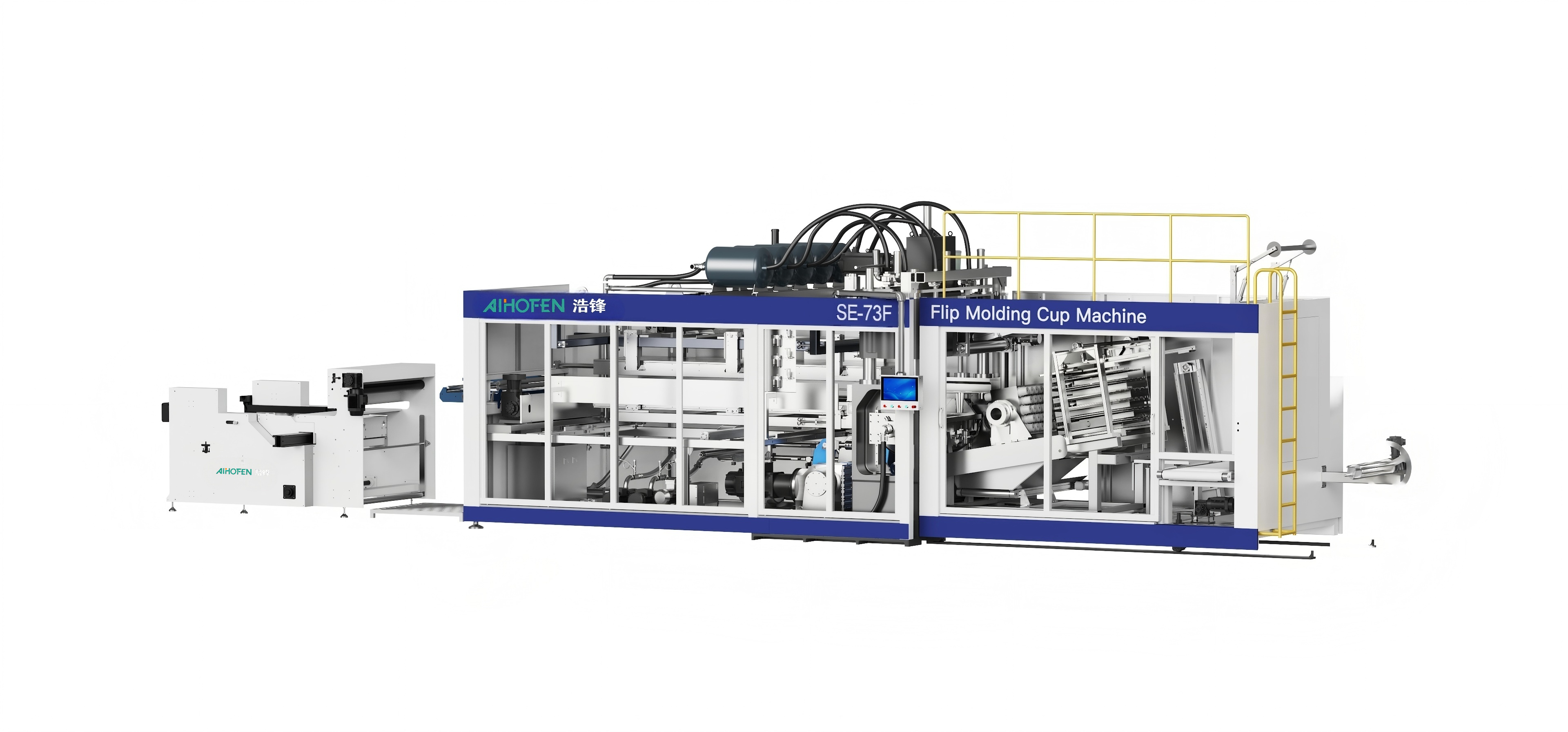
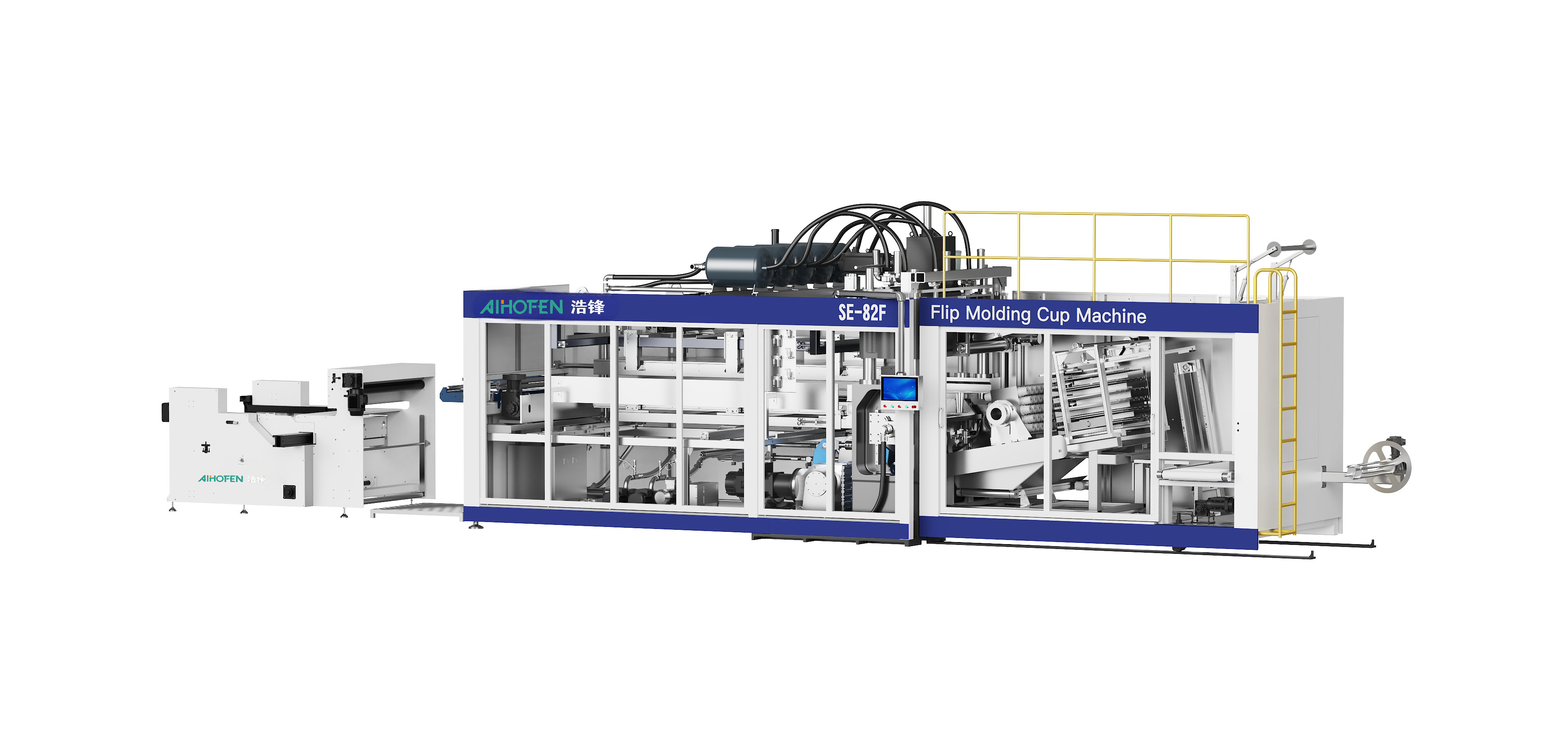
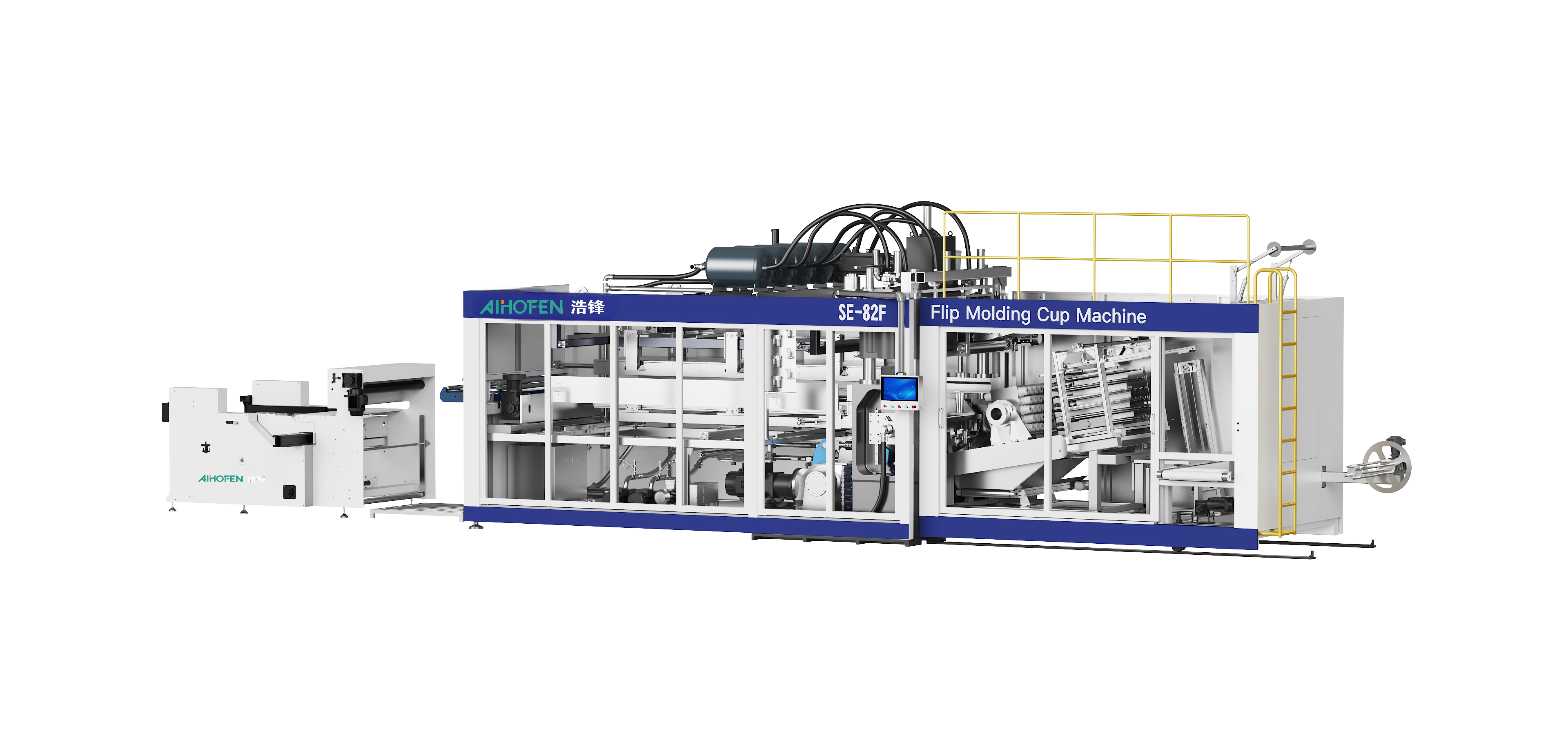
2. Flip-Mold Cup Machine: uses conjugate cam flip mold tables with 75-degree flip action and positive pressure stretch forming. It delivers even sheet stress, uniform wall thickness and full product edges, with a maximum speed of 30 cycles per minute. It is suitable for high-precision, large-scale production of beverage cups, milk tea cups and other high-demand containers
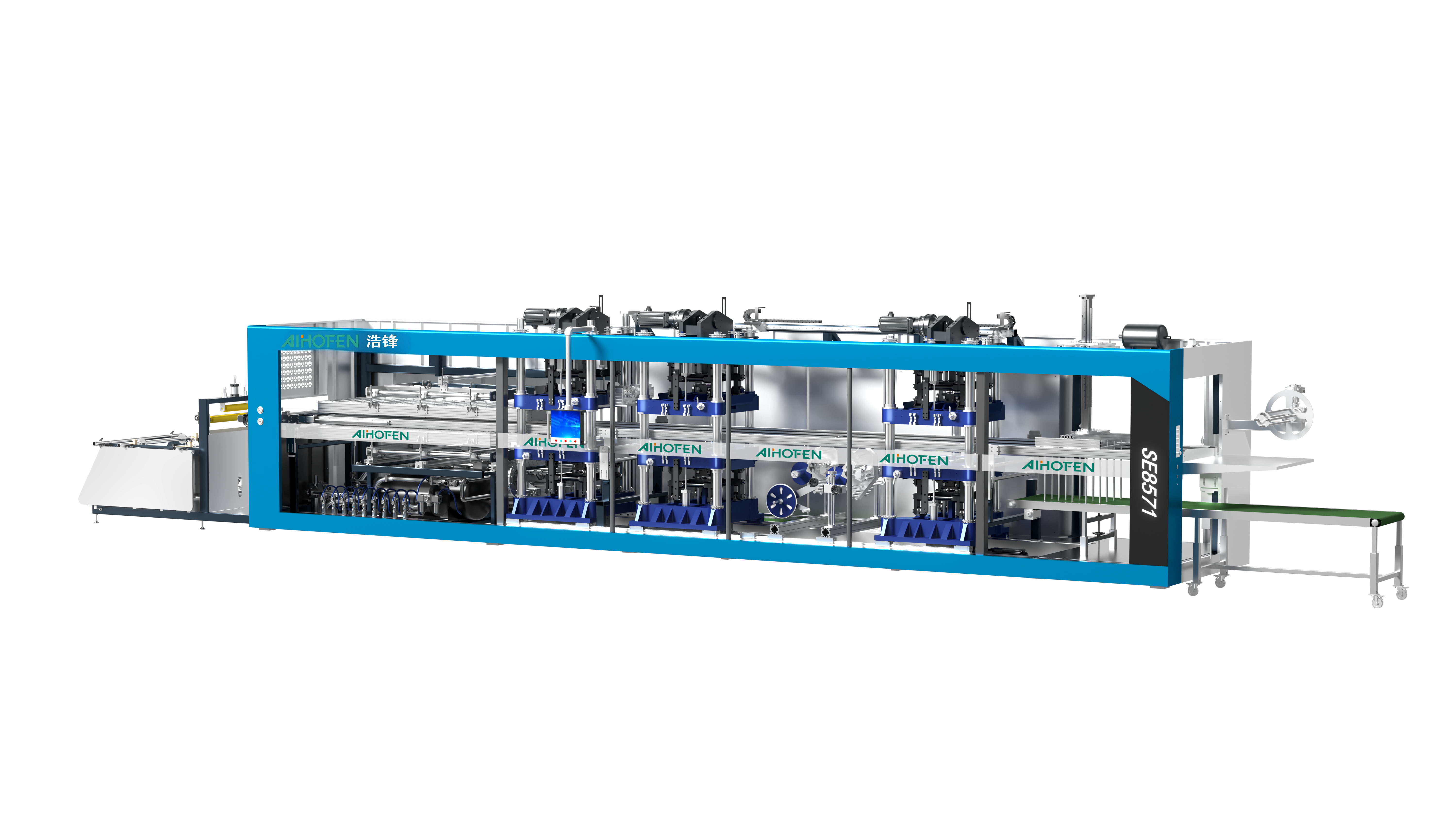
3. Positive-Negative Pressure Multi-Station Cup Machine: uses negative pressure pre-suction plus positive pressure supplementary forming, with independent stations for heating, forming, punching and cutting. It supports perforated products and complex container shapes, suitable for high-end food packaging production
Common Misconceptions
Based on communication with over 1000 global clients, we have identified three common misconceptions about disposable cup making machines:
1. Misconception: Higher forming speed always means better value. Truth: High-speed machines have higher upfront and energy costs, which are not cost-effective for small batch orders. Recommendation: Choose speed based on your monthly production volume, not just maximum speed parameters
2. Misconception: All cup machines can produce biodegradable PLA cups. Truth: Standard fixed-mold machines may lack precise heating control for PLA, leading to uneven forming. Recommendation: Confirm the heating system supports PLA processing before sourcing
3. Misconception: Chinese cup machine factories offer lower quality than European brands. Truth: Leading Chinese manufacturers like AIHOFEN have 30+ years of R&D experience, drafted national industry standards, hold EU CE certification, and serve global clients including Bosch Rexroth, Mercedes-Benz and ZF. Recommendation: Evaluate factories based on certification, client cases and technical parameters, not just origin
FAQ
Q: What is the typical cost range for a disposable cup making machine?
A: Entry-level fixed-mold models start from 60,000 USD, mid-range flip-mold models range from 180,000 to 290,000 USD, and high-end multi-station models start from 88,000 USD.
Q: What certifications are required for disposable cup machines exported to the EU?
A: Machines must hold CE certification covering the Machinery Directive (MD) and Electromagnetic Compatibility (EMC) Directive, as well as comply with RoHS and REACH regulations.
Q: How do I choose the right machine type for my business?
A: Evaluate your monthly production volume, target product type, budget and required materials, then match with fixed-mold, flip-mold or multi-station models accordingly.
Contact Us
Official Website: https://www.haofengtj.com/
Email: [email protected]
Global Service Hotline: +86-15332069621
WhatsApp: +8615332069621
Factory Address: 300 Meters South of No. 3 Road, Jinghai Economic Development Zone North Area, Tianjin, China