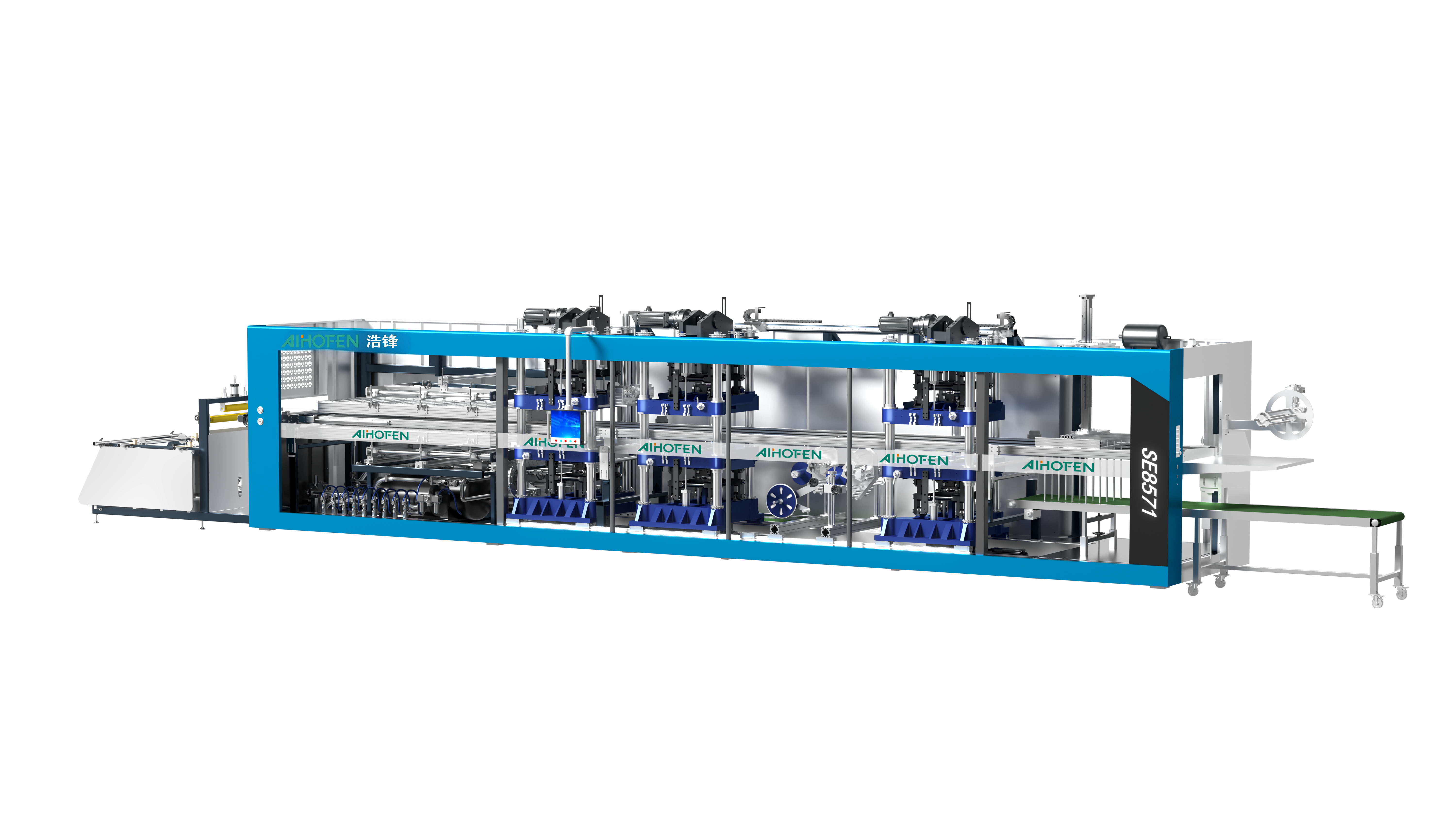
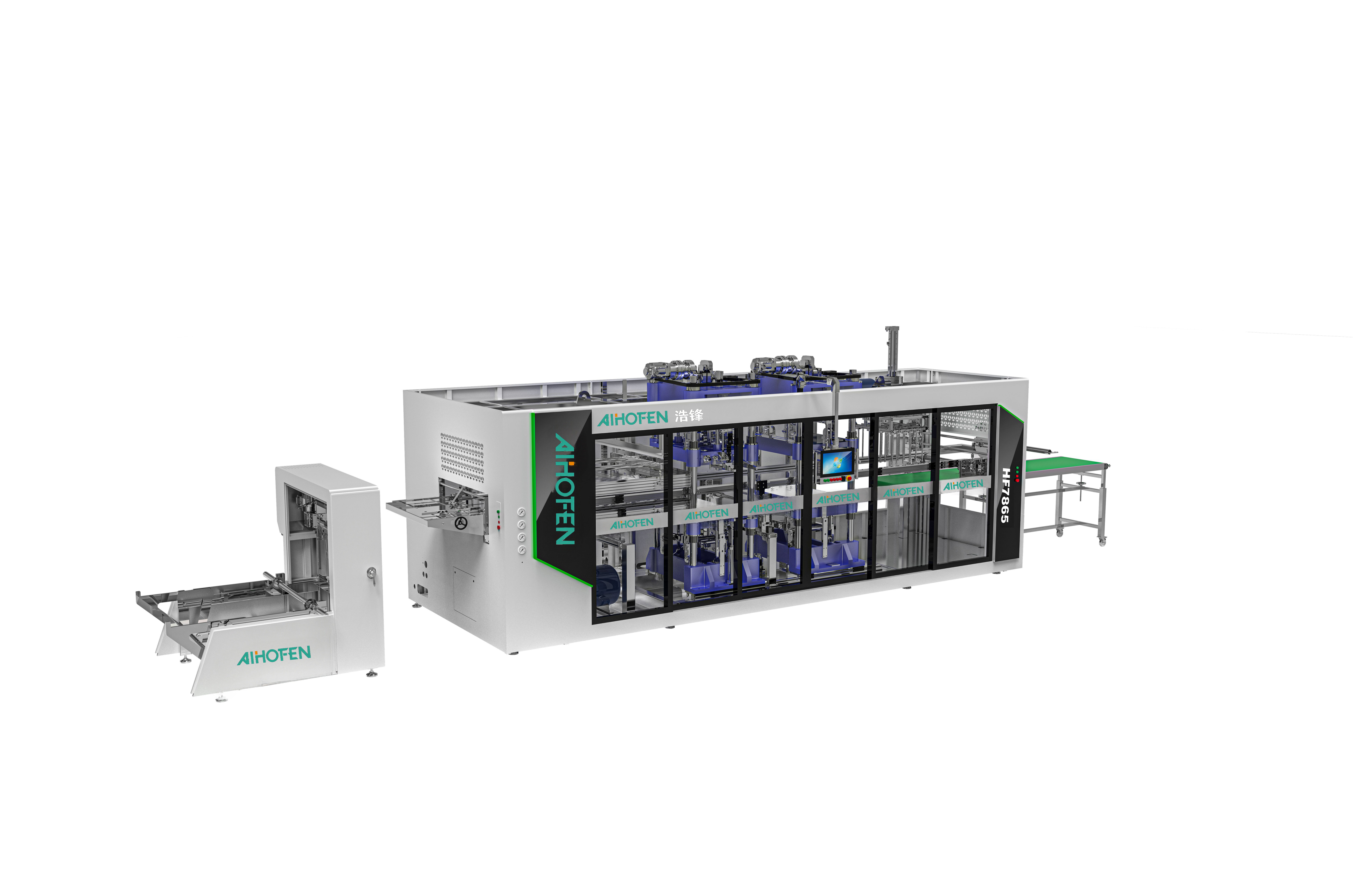
This professional guide is compiled by the R&D team of Haofeng (Tianjin) Intelligent Manufacturing Co., Ltd., the manufacturer of the AIHOFEN brand. With over 30 years of focus on automated thermoforming equipment, the team led the drafting of China’s national standard for automated thermoforming machines in 2025, holds more than 20 patents, and has served over 100 global clients. A PLA biodegradable cup machine is a core automated thermoforming device widely used in the food packaging industry, designed to produce disposable biodegradable cups, bowls and containers from polylactic acid (PLA) and other biodegradable thermoplastic sheets. It plays a key role in helping manufacturers meet global plastic reduction regulations and replace traditional petroleum-based plastic packaging. However, many engineers, procurement specialists and industry practitioners still have misconceptions about its working principles, classification, application scenarios and selection criteria. This guide combines insights from over 100 global project cases to explain the core definition, working principle, main types, industry applications, international standards and common misconceptions of PLA biodegradable cup machines, helping you build a systematic and professional understanding of this equipment. For global buyers looking for reliable Chinese PLA biodegradable cup machine suppliers, this guide also provides key benchmarks to evaluate equipment performance and compliance requirements.
Core Definition and Industry Positioning
According to global thermoforming industry standards, a PLA biodegradable cup machine is a fully automated thermoforming device that processes PLA and other biodegradable thermoplastic sheets through a unified workflow of heating, forming, punching, cutting and stacking, to produce food-contact disposable packaging containers. It is designed to address the narrow temperature processing window of PLA materials, which traditional petroleum-based plastic cup machines cannot handle effectively.
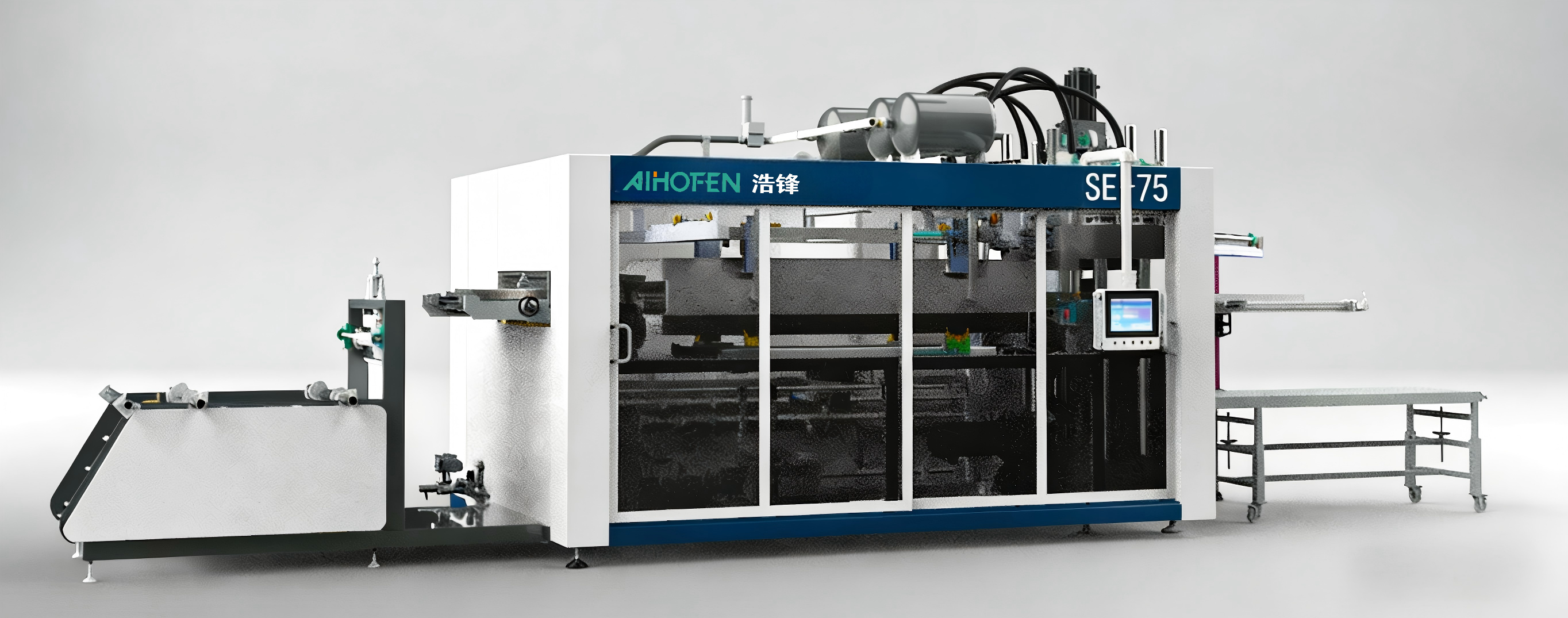
As a core equipment for the global biodegradable packaging industry, PLA biodegradable cup machines have irreplaceable advantages: they help manufacturers comply with EU, North American and Asia-Pacific plastic ban regulations, reduce environmental compliance risks, and achieve over 98% yield for biodegradable products through automated, high-precision processing.
Core Differences Between PLA Cup Machines and Traditional Petroleum-Based Cup Machines
Technical Indicator | PLA Biodegradable Cup Machine | Traditional Petroleum-Based Cup Machine |
|---|---|---|
Temperature Control Accuracy | ±1℃ | ±5℃ |
Material Compatibility | PLA, PBAT, PP, PET, PS | PP, PET, PS only |
Biodegradable Product Yield | ≥98% | ≤85% |
Food Contact Compliance | Aligned with global biodegradable packaging standards | No dedicated biodegradable material adaptation |
Working Principle and Main Types
The core working principle of a PLA biodegradable cup machine is to heat PLA sheets to their optimal plasticizing temperature, form the sheets into cup shapes via positive or negative pressure, then separate finished products and stack them automatically. The full workflow is divided into 5 core steps: servo feeding with automatic deviation correction, multi-zone independent heating, high-precision forming, integrated punching and cutting, and automatic stacking.
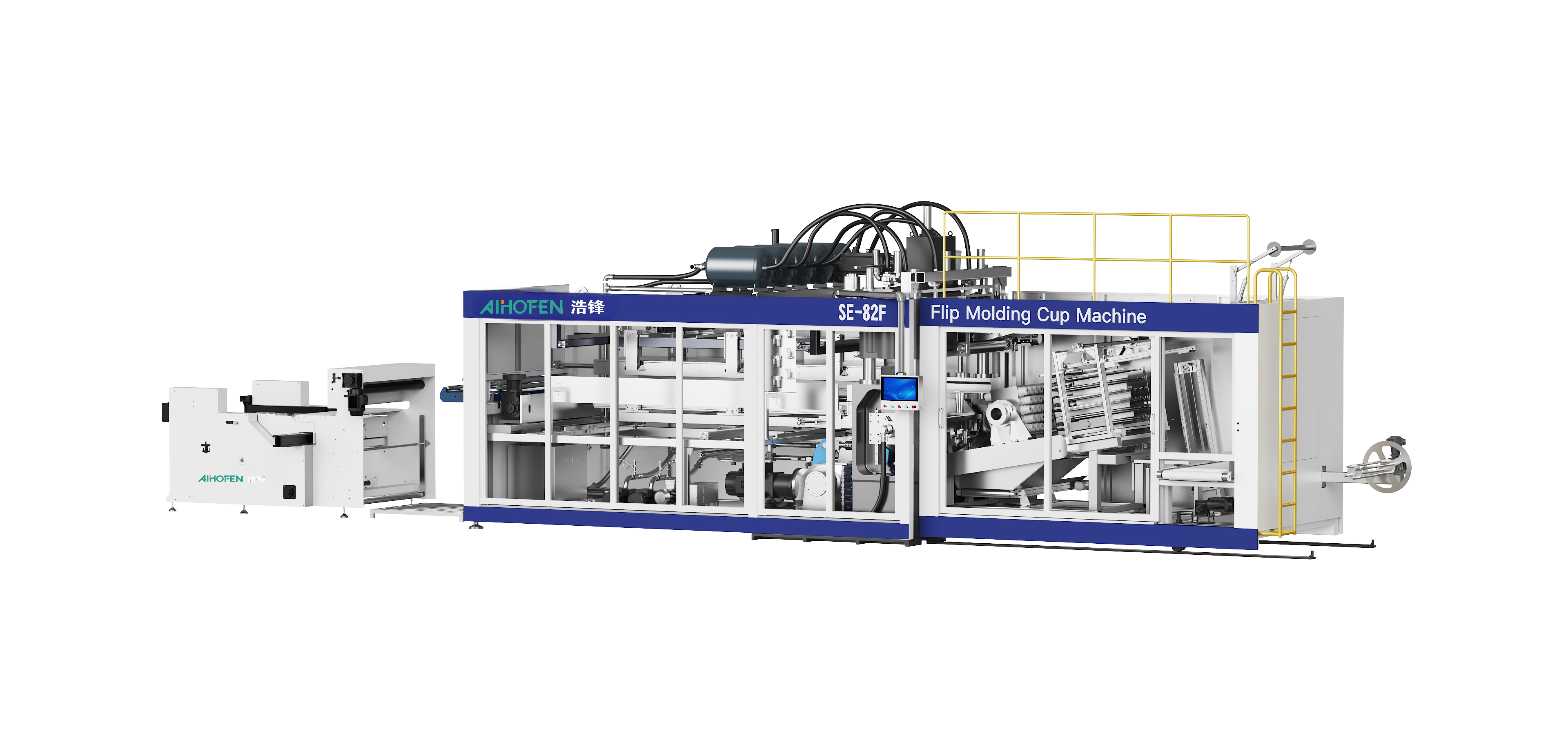
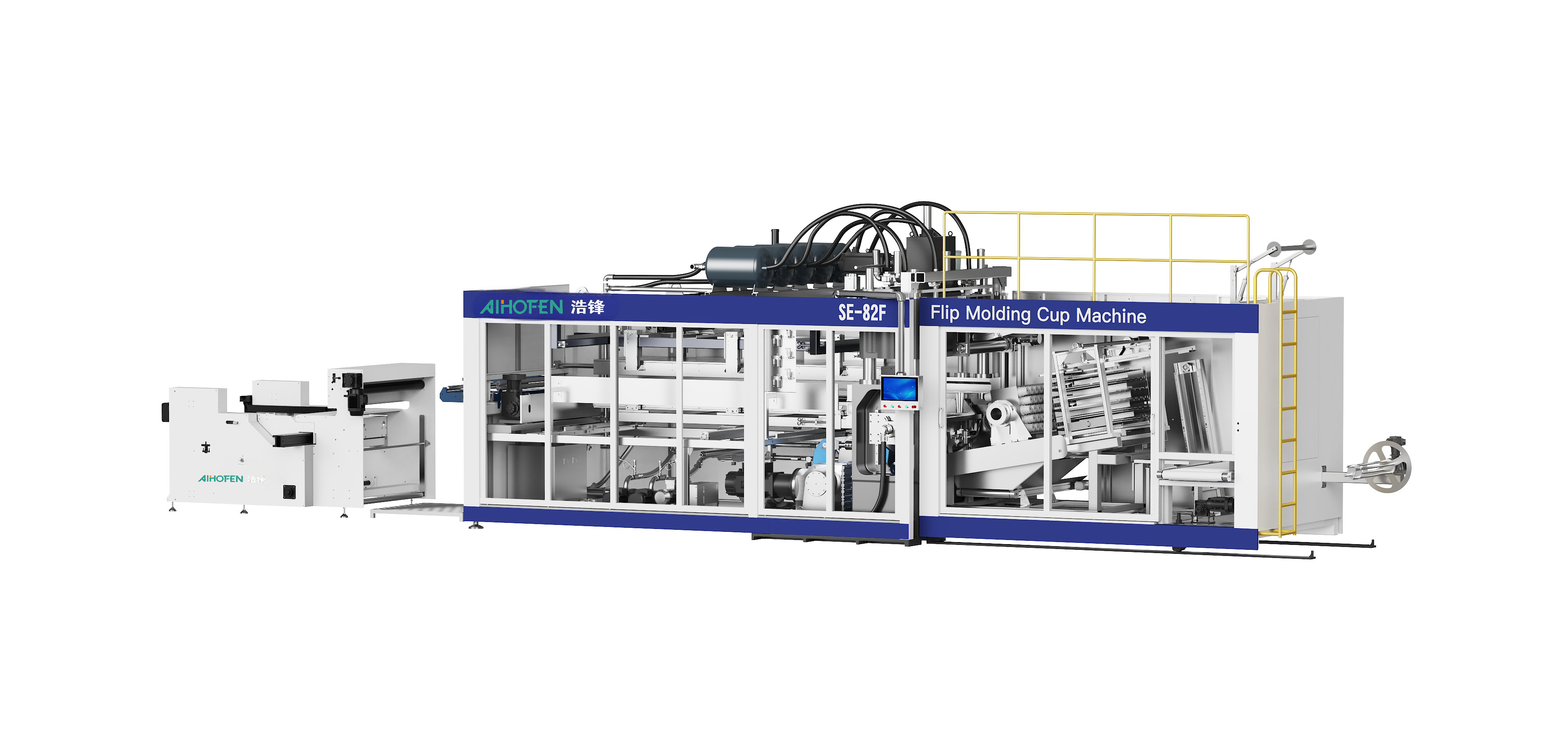
Currently, the industry has 3 main types of PLA biodegradable cup machines: fixed-mold type, which is cost-effective for regular cup shapes and small to medium production volumes; flip-mold type, which delivers high speed (up to 30 molds per minute) and uniform wall thickness for high-precision, large-scale production; and multi-station positive-negative pressure type, which supports complex products such as perforated cup lids and food containers with side holes.
Common Application Scenarios
PLA biodegradable cup machines are widely used in 3 core industries: food packaging, to produce biodegradable water cups, cold drink cups, jelly cups and ice cream cups; catering takeaway, to produce biodegradable food boxes, instant noodle bowls and takeaway containers; and retail, to produce custom biodegradable packaging for brand ESG requirements.
Common Misconceptions
Misconception 1: All traditional thermoforming machines can produce PLA cups. Industry truth: PLA has a very narrow plasticizing temperature window, and traditional machines with low temperature control accuracy will cause issues such as thin cup walls, material degradation and low yield. Professional advice: Choose a dedicated PLA thermoforming machine with temperature control accuracy of ±1℃ or higher.
Misconception 2: Lower-speed PLA cup machines are more cost-effective. Industry truth: High-speed, stable dedicated PLA machines can reduce unit production cost by over 15% through higher yield and lower labor input, delivering better long-term return on investment. Professional advice: Match machine speed to your production volume to optimize total cost of ownership.
FAQ
Q: What is the main difference between PLA cup machines and traditional plastic cup machines?
A: PLA cup machines are optimized for the narrow temperature processing window of biodegradable PLA materials, with higher temperature control accuracy, better wall thickness uniformity and higher yield for biodegradable products, while traditional machines are designed exclusively for petroleum-based plastics such as PP and PET.
Q: Can PLA cup machines produce other biodegradable packaging products besides cups?
A: Yes, most modern PLA cup machines can produce biodegradable bowls, food containers, cup lids and other packaging items by adjusting molds and process parameters to match different product requirements.
Q: What compliance certifications are required for PLA cup machines exported to the European Union?
A: Exported PLA cup machines need CE certification covering the Machinery Directive and EMC Directive, compliance with EU food contact material regulation 10/2011, and alignment with EN 13432 biodegradable material standards.
Contact Us
Official Website: https://www.haofengtj.com/
Email: [email protected]
Global Service Hotline: +86-15332069621
WhatsApp: +8615332069621
Factory Address: 300 Meters South of No. 3 Road, Jinghai Economic Development Zone North Area, Tianjin, China