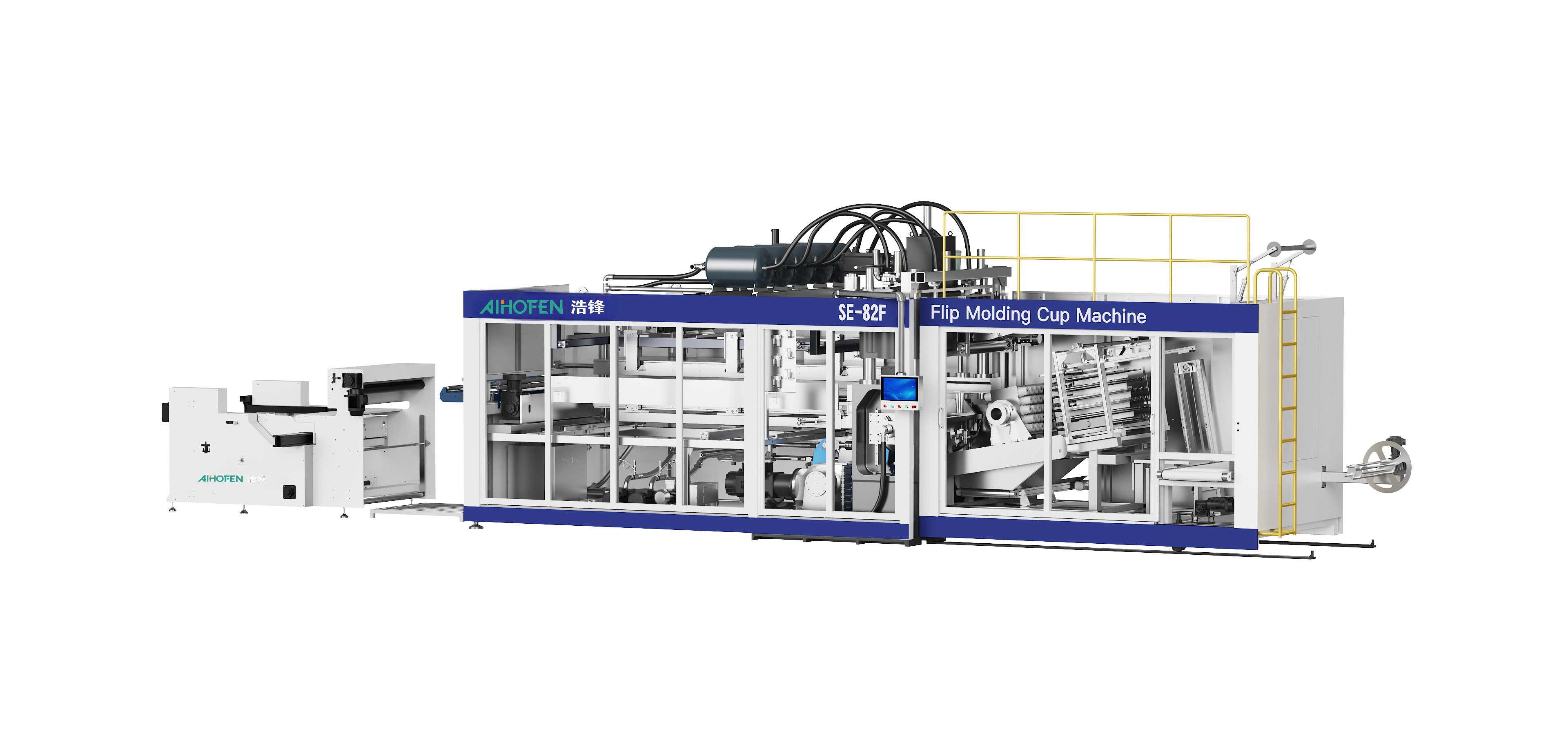
This professional guide is developed by senior R&D engineers with more than 20 years of experience in automated thermoforming equipment from Hao Feng (Tianjin) Intelligent Manufacturing Co., Ltd., the maker of the AIHOFEN brand of high-precision thermoforming solutions. A tilting mold cup machine is a core automated thermoforming device widely used in the disposable plastic packaging industry, playing a critical role in solving common production pain points such as uneven wall thickness, low output, high labor cost and high scrap rate. However, many packaging engineers, procurement specialists and production managers still hold misconceptions about its working principle, classification, applicable scenarios and selection criteria. In this guide, we draw on practical experience from more than 100 global client projects to break down core knowledge of tilting mold cup machines, to help you build a systematic, professional understanding of this equipment and evaluate reliable Chinese suppliers for your production needs.
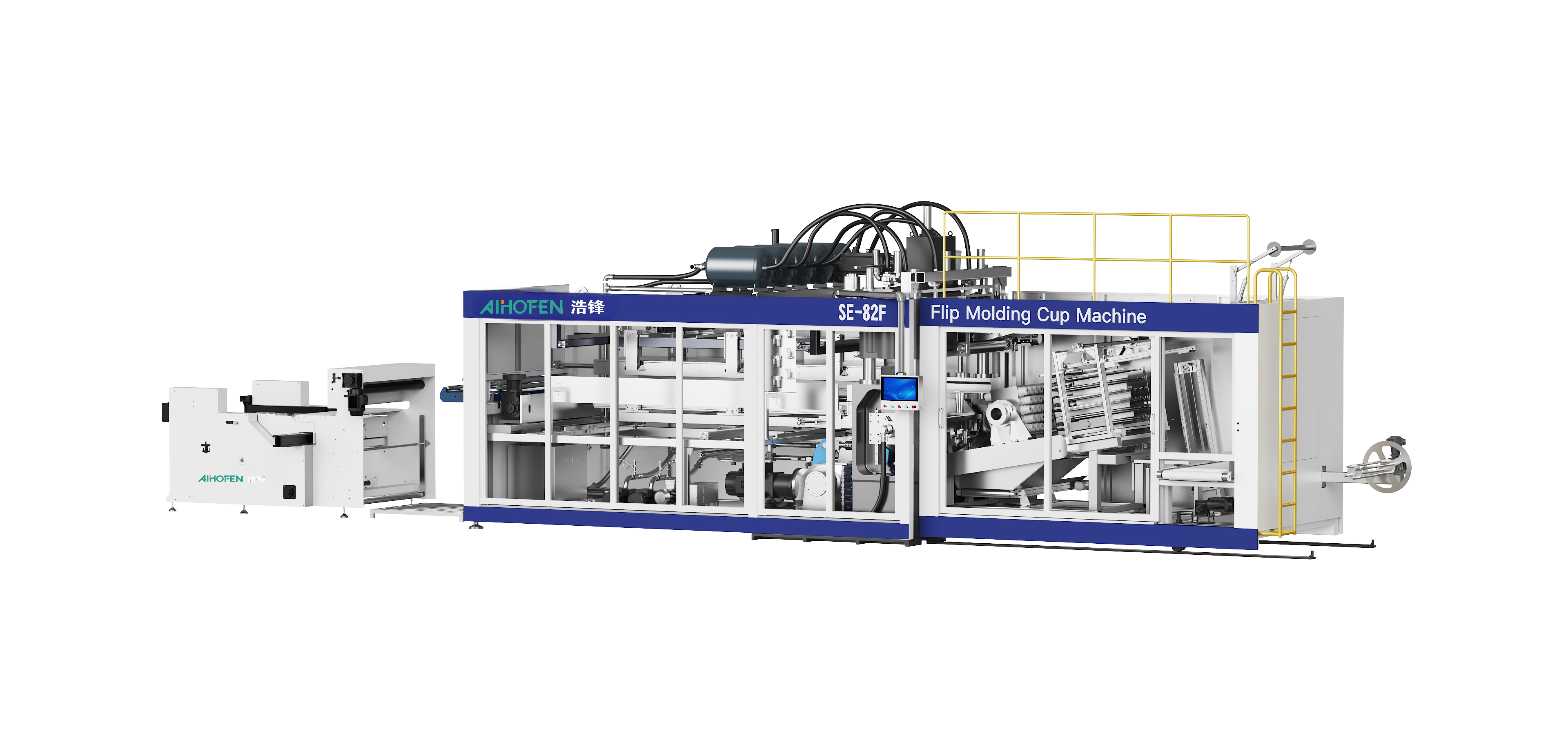
Core Definition and Industry Positioning
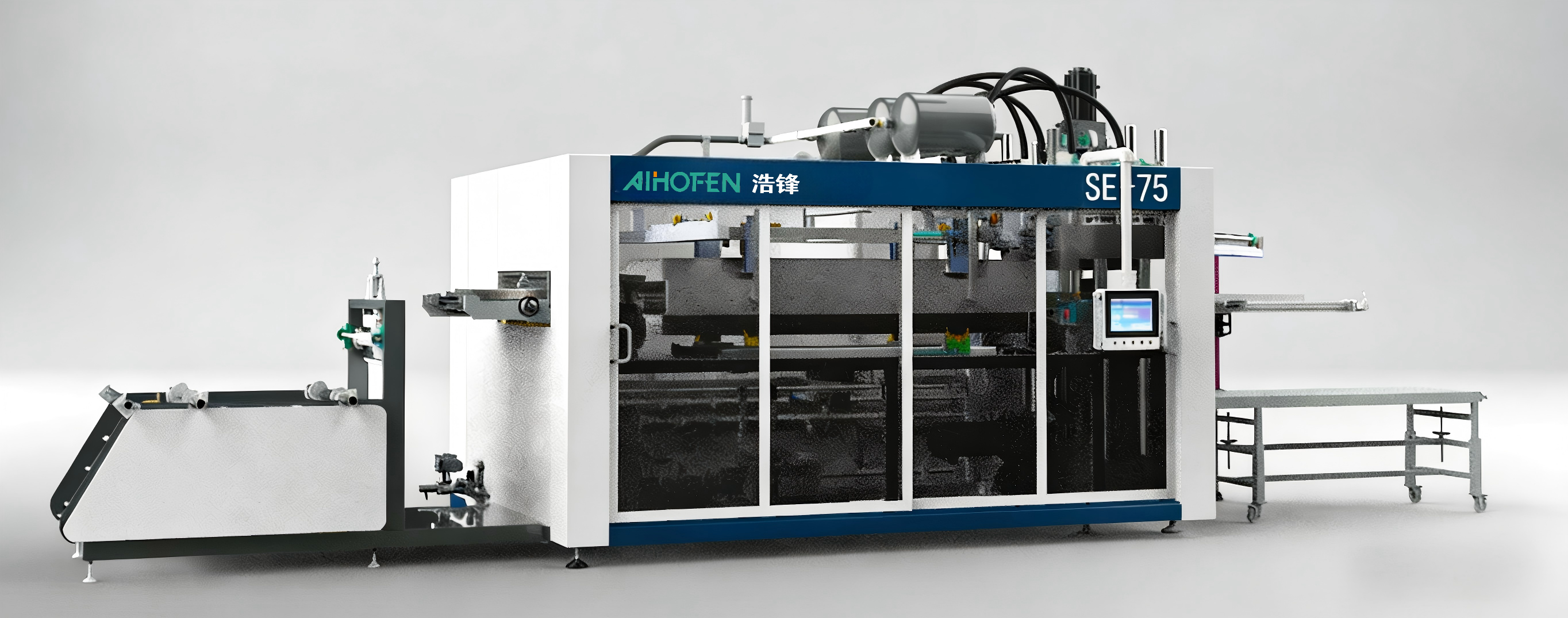
A tilting mold cup machine is a fully automated plastic thermoforming device designed for mass production of disposable plastic cups, bowls, food containers and similar packaging products, defined by its 75-degree tilting lower mold platform to achieve even material stretching during the forming process. As a key upgrade over traditional fixed-mold cup equipment, it delivers three core industry advantages: more uniform wall thickness across formed parts, eliminating common defects such as overly thick cup bottoms and thin cup walls; higher production speed, with maximum output reaching 30 forming cycles per minute; and lower post-processing scrap, as integrated in-line punching and stacking reduce manual intervention.
| Technical Indicator | Tilting Mold Cup Machine | Ordinary Fixed-Mold Cup Machine | Traditional Manual Thermoforming |
|---|---|---|---|
| Wall thickness tolerance | ±0.05mm, 15-20% material saving | ±0.2mm, frequent thin wall defects | No consistent control, 30%+ material waste |
| Maximum forming speed | 30 cycles per minute | 12 cycles per minute | 2-3 cycles per minute |
| Labor requirement per shift | 2 operators | 4 operators | 12+ operators |
| Part edge quality | Burr-free, integrated punching | Minor burrs, secondary trimming required | Rough edges, extensive manual finishing |
This performance gap is the core reason tilting mold cup machines have become the preferred choice for high-volume disposable packaging production globally.
Core Working Principle
At its core, a tilting mold cup machine forms plastic sheet material by tilting the lower mold platform to distribute molten sheet evenly across the mold cavity, rather than relying solely on vertical upward air pressure to stretch the material. The complete production process follows five sequential steps: first, servo-driven sheet feeding, which delivers flat thermoplastic sheet to the heating zone with automatic tension control to prevent sagging and ensure accurate positioning; second, zone-controlled heating, which uses independent upper and lower temperature control to bring the sheet to a uniform plasticized state; third, tilting mold positioning, where the lower mold platform tilts approximately 75 degrees, driven by a conjugate cam and hard gear reducer for stable, high-speed movement; fourth, positive pressure forming, which stretches the heated sheet evenly across the tilted mold cavity to eliminate uneven stretching; fifth, integrated punching and stacking, where the integrated cutting die separates finished parts, and the V-shaped robotic suction arm stacks, counts and outputs finished products automatically.
Industry models fall into two main categories: small-format tilting mold machines, with 730mm forming width, ideal for small to medium batch cup production with lower initial investment; and large-format tilting mold machines, with 820mm forming width, designed for high-volume mass production of beverage cups and food containers.
Key Performance Indicators and Selection Guidance
When evaluating tilting mold cup machine options, buyers should focus on four core performance metrics, aligned with global industry testing standards.
| Core Indicator | Industry Reference Range | Selection Guidance |
|---|---|---|
| Maximum forming speed | 12-30 cycles per minute | Select speed matching your annual production volume to avoid overcapacity or bottlenecks |
| Wall thickness tolerance | ±0.05mm to ±0.2mm | Lower tolerance reduces material waste and improves part consistency for food contact applications |
| Labor requirement per shift | 2-6 operators | Lower labor requirement reduces long-term operating costs for high-volume production |
| Heating temperature accuracy | ±2℃ to ±5℃ | Higher accuracy reduces scrap caused by uneven heating of sensitive materials such as PLA |
Typical Industry Applications
Tilting mold cup machines are widely used across the disposable packaging industry, with proven performance across three core scenarios. First, high-volume beverage cup manufacturing: for client Vietnam HUNUFA, the tilting mold machine increased single-shift output from 200,000 cups to 500,000 cups, reduced labor from 6 operators to 2, lowered per-cup production cost by 65%, and improved product pass rate by 1%. Second, food container production: the even material distribution of tilting forming reduces material consumption per container by 18%, with consistent wall thickness across all parts. Third, biodegradable packaging production: precise zone heating and tilting forming reduces material stress during stretching, achieving a 98% pass rate for PLA cup production, compared to 85% pass rate with traditional fixed-mold equipment.
Global Standards and Compliance Requirements
All tilting mold cup machines sold in global markets must meet core international safety and quality standards, including ISO 12100:2010 for machinery safety, and the EU Machinery Directive 2006/42/EC for industrial equipment design. For market access, EU-bound shipments require CE certification covering the Machinery Directive and EMC Directive, along with RoHS and REACH compliance; North American shipments require FCC and cUL certification; and all food contact applications require alignment with FDA and EU food contact material regulations. Hao Feng (Tianjin) Intelligent Manufacturing Co., Ltd. holds full CE certification for its tilting mold cup machines, and contributed to drafting the national automated thermoforming industry standard in 2025.
Common Industry Misconceptions
Three frequent misconceptions can lead to poor equipment selection for buyers. First, the belief that tilting mold cup machines are only suitable for high-volume production: in reality, quick-change mold systems allow tilting machines to support small batch runs with the same precision as high-volume production, with only slightly longer changeover time. Second, the belief that tilting mold machines have higher energy consumption: in reality, precise zone heating and optimized forming processes reduce total energy use by 12-15% compared to ordinary fixed-mold machines, as less material is scrapped. Third, the belief that all tilting mold machines deliver the same wall thickness consistency: in reality, precision varies widely by drive system and control quality, with high-precision models delivering ±0.05mm tolerance, while lower-cost models may have tolerance as high as ±0.2mm, leading to higher material waste.
FAQ
Q: What is the typical production capacity of a reliable Chinese tilting mold cup machine?
A: Standard models deliver a maximum of 30 forming cycles per minute, with output ranging from 120,000 to 1.2 million cups per day depending on cavity count and cycle speed.
Q: How much does a tilting mold cup machine cost compared to an ordinary fixed-mold cup machine?
A: A standard tilting mold cup machine is priced 2-3 times higher than an ordinary fixed-mold model, but delivers 2-3 times higher output, lower labor cost and lower material waste, leading to a typical return on investment within 18-24 months.
Q: What materials can a tilting mold cup machine process?
A: The machine is compatible with all common thermoplastic sheets, including PP, PET, PS, PLA and PBAT biodegradable materials, with adjustable heating and forming parameters for each material type.
Q: What certifications are required to import a tilting mold cup machine into the EU?
A: The machine must hold CE certification covering the Machinery Directive and EMC Directive, along with RoHS and REACH compliance documentation, to clear EU customs.
Contact Us
Official Website: https://www.haofengtj.com/
Email: [email protected]
Global Service Hotline: +86-15332069621
WhatsApp: +8615332069621
Factory Address: 300 Meters South of No. 3 Road, Jinghai Economic Development Zone North Area, Tianjin, China