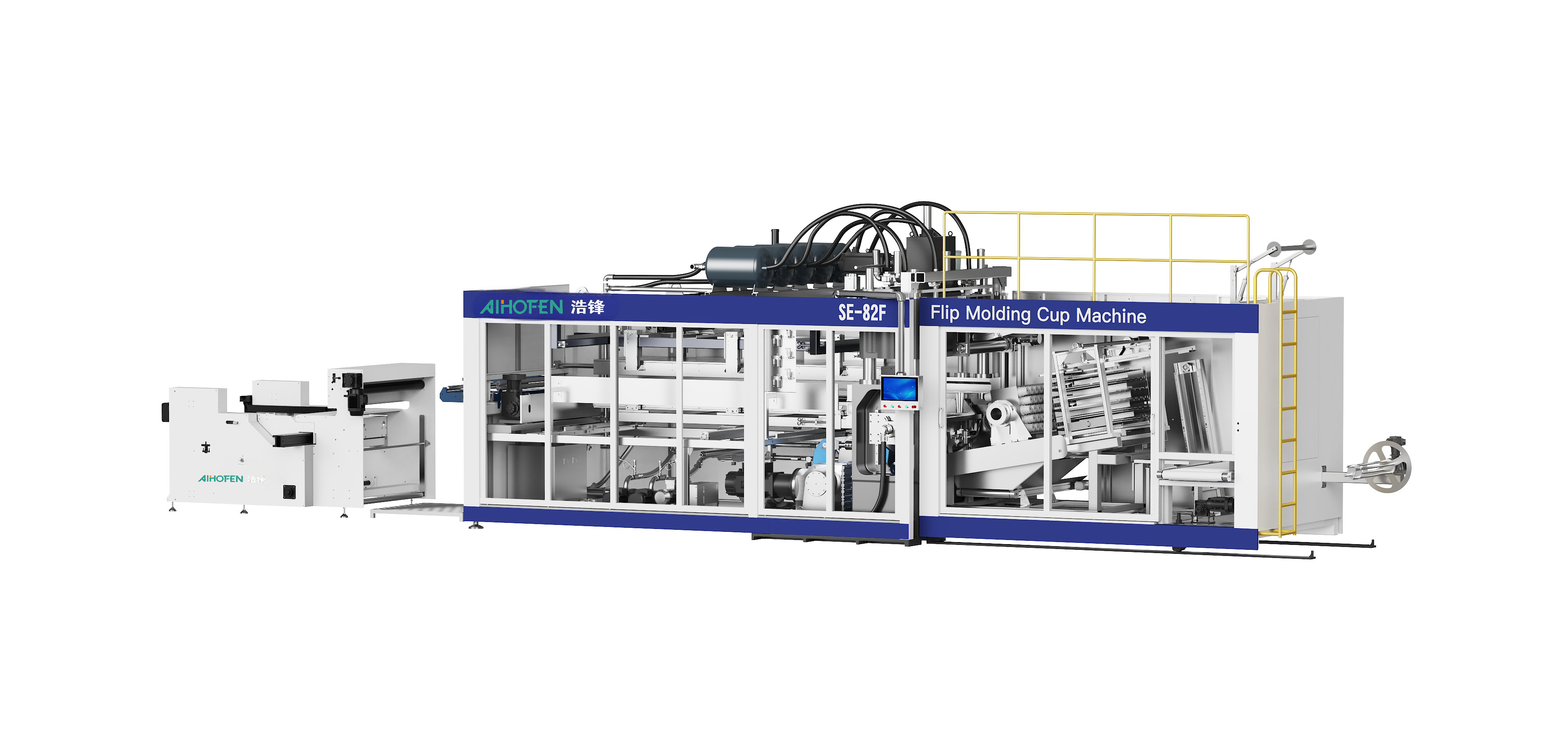
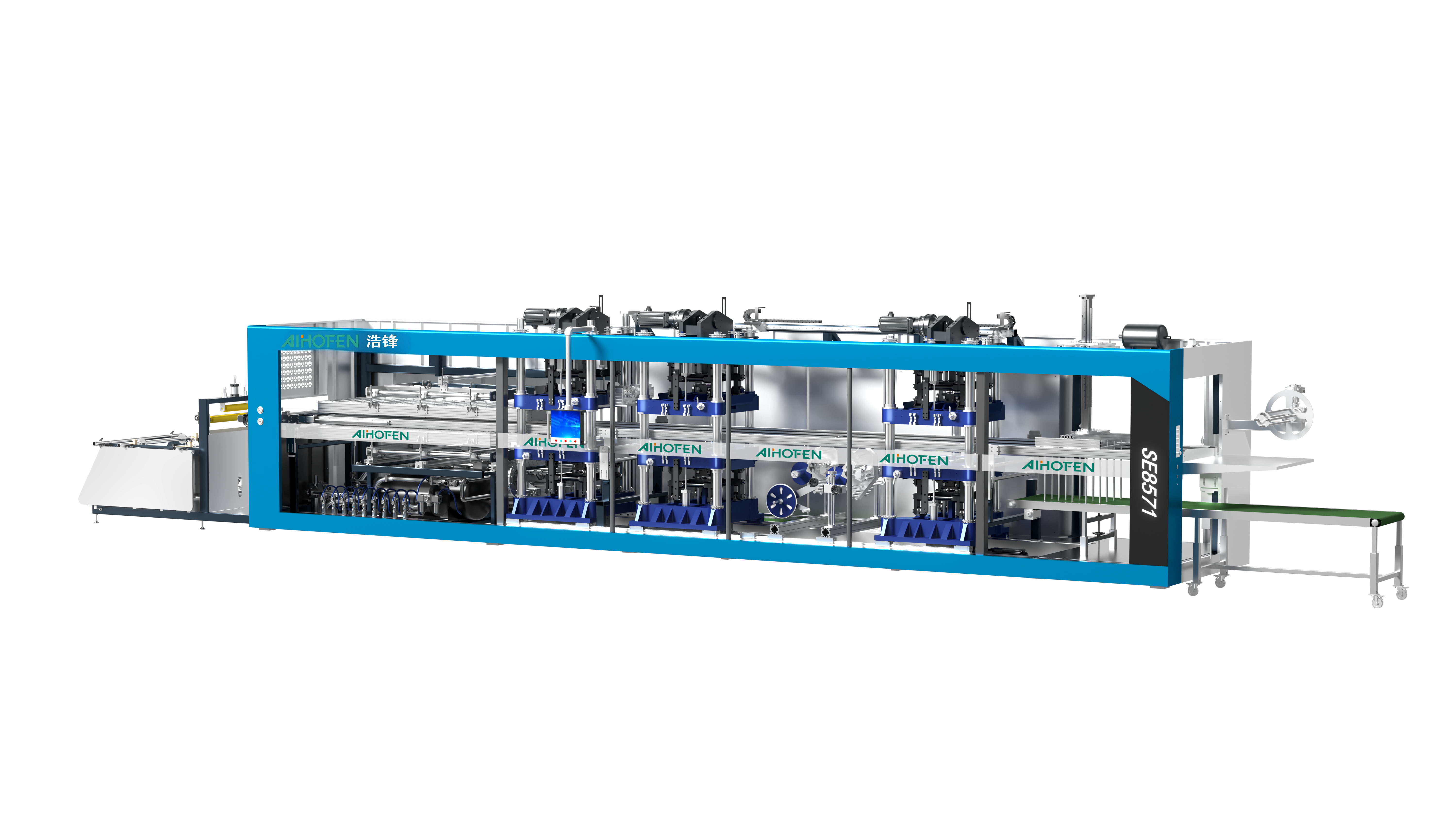
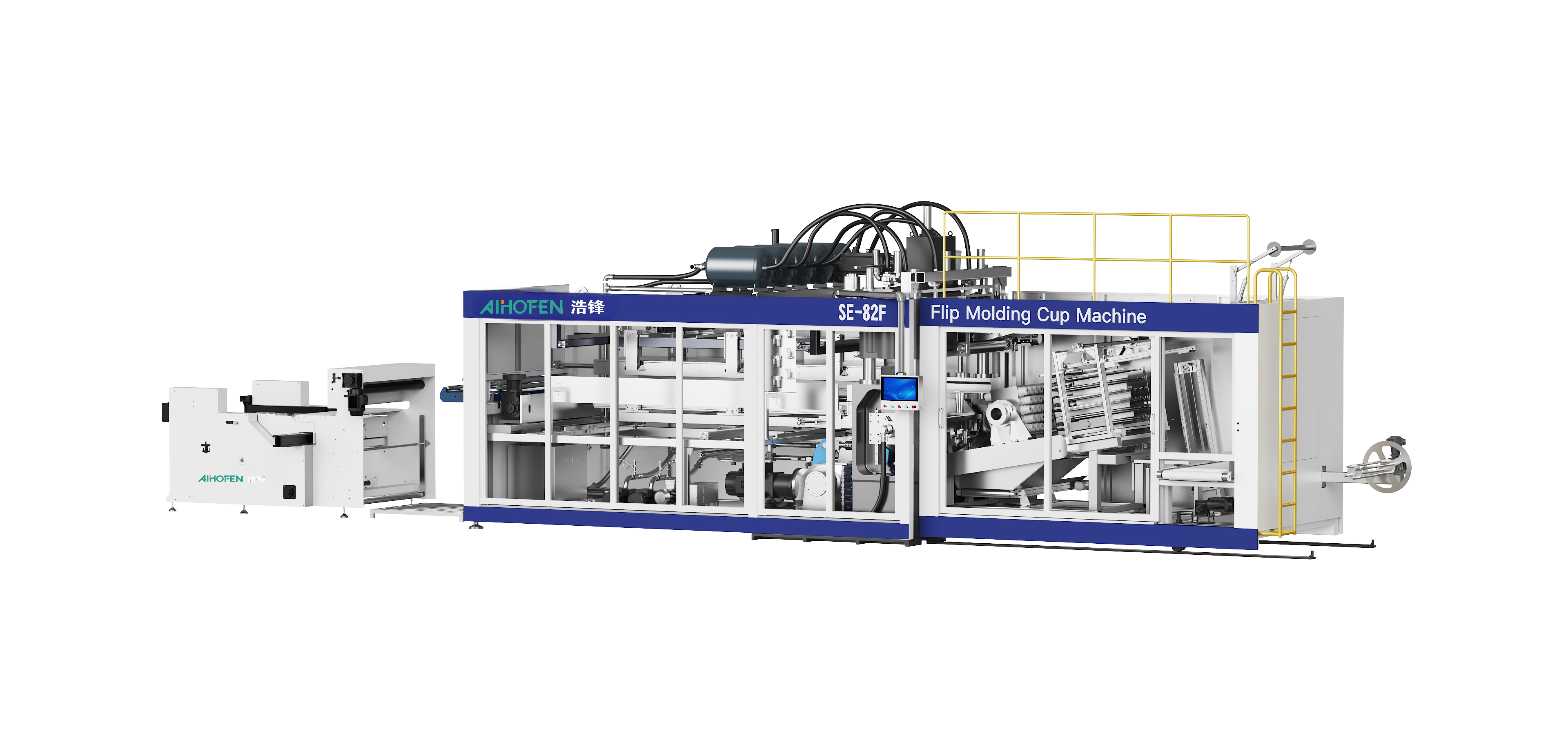
This professional guide is compiled by the R&D team of Haofeng (Tianjin) Intelligent Manufacturing Co., Ltd. (brand AIHOFEN), a specialized provider of automated thermoforming equipment with over 20 years of industry experience and 100+ global client projects. A tilting mold cup machine is a core automated thermoforming device widely used in the disposable plastic packaging industry, addressing key pain points of traditional cup making equipment such as uneven wall thickness, low production efficiency, and high labor costs. Many engineers, procurement specialists, and industry practitioners still have misconceptions about its working principle, classification, application scenarios, and selection criteria. This guide systematically explains the core definition, working principle, key performance indicators, industry applications, compliance requirements, and common misconceptions of tilting mold cup machines, to help you build a professional and practical understanding of this equipment.
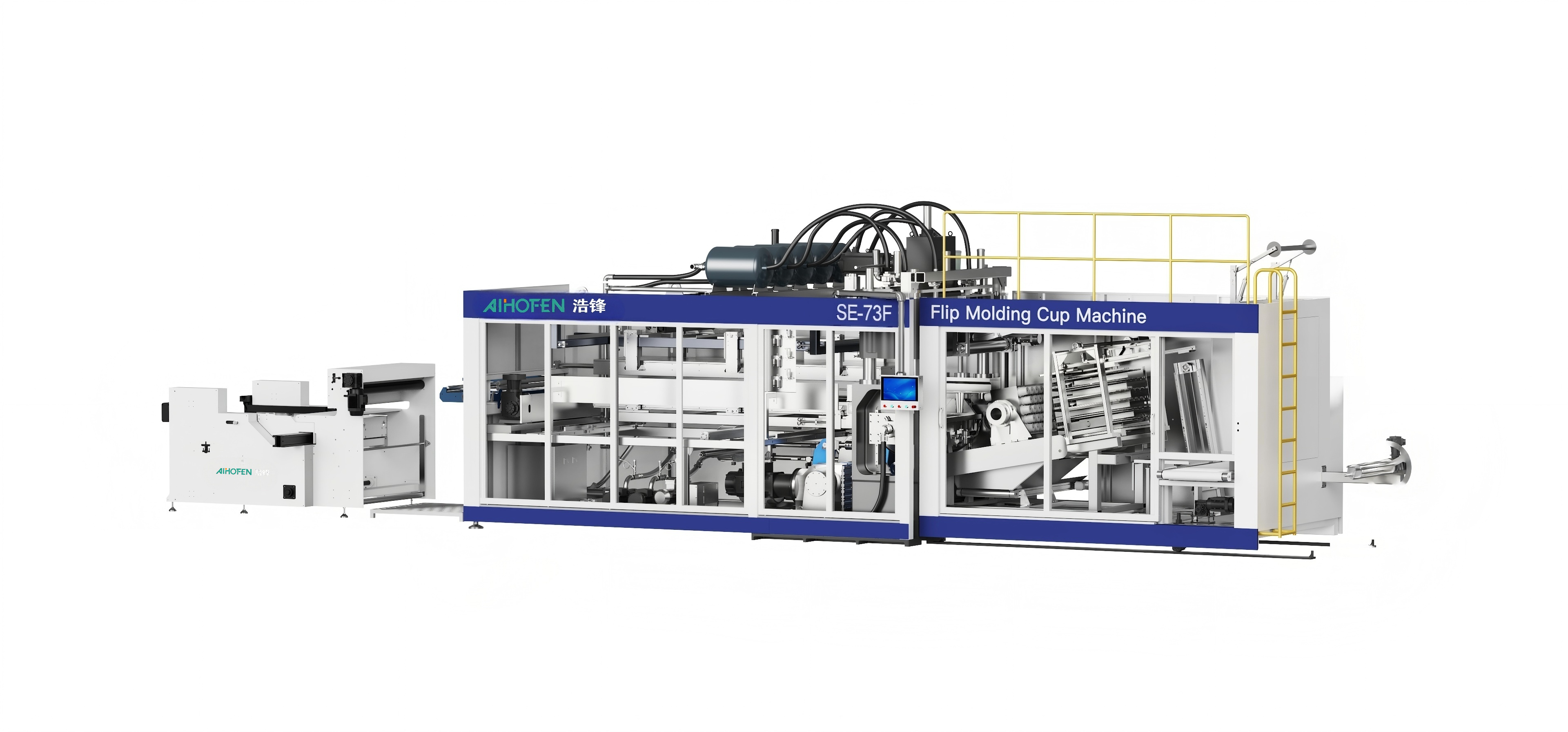
Core Definition and Industry Positioning
According to the China Plastics Machinery Industry Association, a tilting mold cup machine is a fully automatic thermoforming equipment that uses a conjugate cam-driven tilting mold platform to achieve uniform sheet stretching, for large-scale production of disposable plastic cups, bowls, boxes, and other packaging containers. In simple terms, it is an upgraded version of traditional fixed-mold cup making equipment that eliminates common defects such as overly thick cup bottoms and thin cup walls.
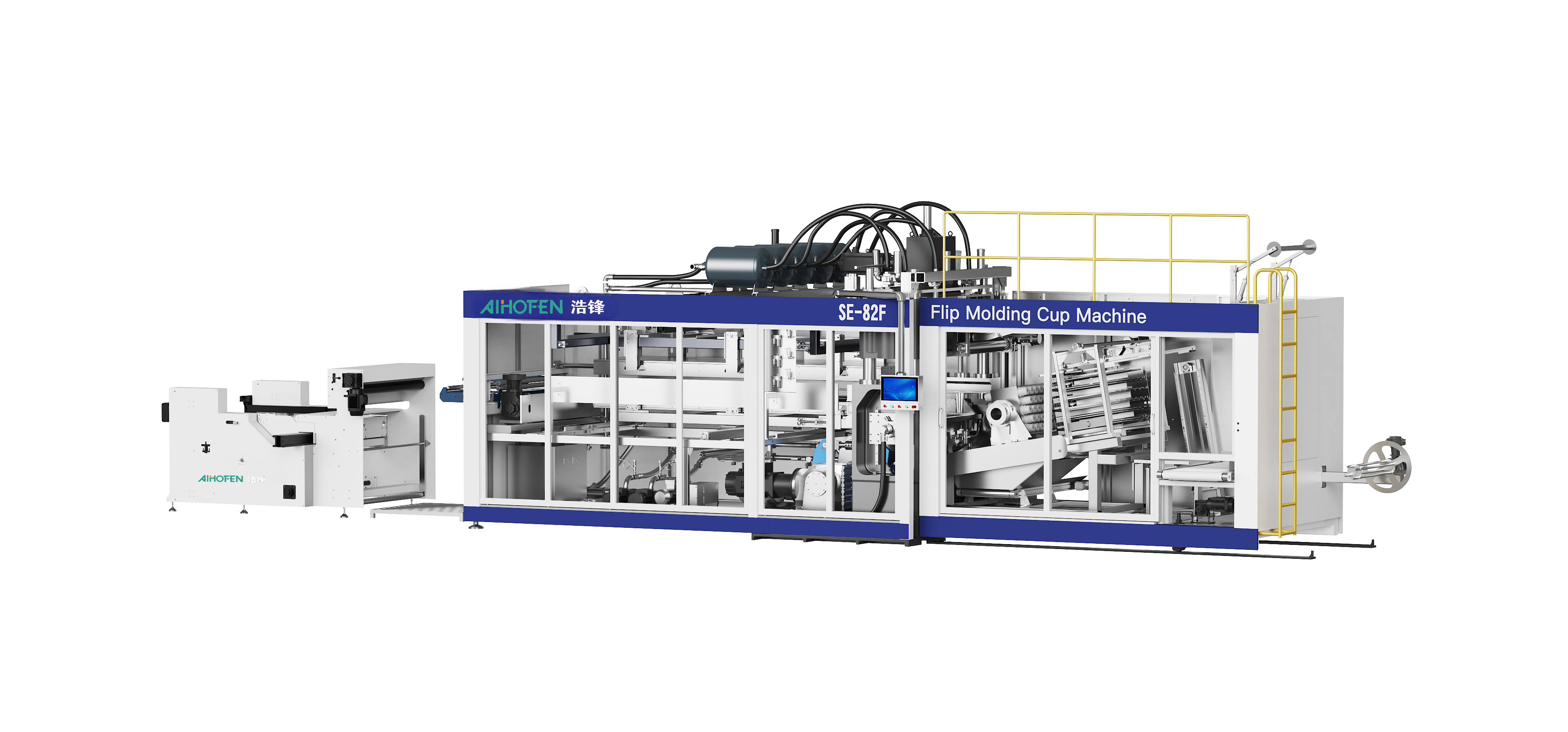
As a core equipment in the disposable packaging manufacturing sector, tilting mold cup machines offer three irreplaceable advantages:
1. Uniform wall thickness: Eliminates local material thinning, reducing material waste by up to 15% compared to conventional equipment.
2. High production speed: Reaches a maximum of 30 cycles per minute, supporting large-scale mass production.
3. Integrated workflow: Combines feeding, heating, forming, cutting, and stacking in one process, reducing labor requirements by 70% or more.
Core Differences Between Tilting Mold Cup Machines and Conventional Alternatives
| Technical Indicator | Tilting Mold Cup Machine | Conventional Fixed-Mold Cup Machine | Vacuum Thermoforming Machine |
|---|---|---|---|
| Wall thickness uniformity | ±0.05mm | ±0.2mm | ±0.15mm |
| Maximum forming speed | 30 cycles/minute | 15 cycles/minute | 10 cycles/minute |
| Applicable product depth | Up to 150mm | Up to 80mm | Up to 50mm |
| Unit production cost | Low | Medium | High |
Working Principle
In simple terms, a tilting mold cup machine works by tilting the lower mold platform during the forming process to ensure the heated sheet material is stretched evenly across all areas. The complete workflow consists of 5 core steps:
1. Servo sheet feeding: Servo-driven chain transmission with automatic deviation correction and tension control, preventing sheet sagging and ensuring accurate positioning.
2. Zoned heating: Tunnel-type diffuse radiation heating with independently controlled upper and lower heating zones, heating the sheet to a uniform plasticized state.
3. Conjugate cam tilting: The lower mold platform tilts approximately 75 degrees, paired with servo-driven positive pressure stretching to ensure the sheet adheres evenly to the mold.
4. Integrated punching and cutting: Upper and lower mold edges perform synchronous cutting, producing burr-free products with minimal connected cups.
5. Automatic stacking: V-type mechanical arm suction stacking, automatic counting and output.
Key Performance Indicators and Classification
Tilting mold cup machines are classified by forming format into small format (500750mm), medium format (600850mm), and large format (8501200mm), and by control system into CNC and PLC models. The core performance indicators for selection are as follows:
| Core Indicator | Industry Reference Range | Selection Significance |
|---|---|---|
| Maximum forming speed | 20-30 cycles/minute | Matches production capacity requirements to avoid overinvestment |
| Wall thickness tolerance | ±0.03-±0.1mm | Determines material utilization rate and product quality |
| Material compatibility | PP, PET, PS, PLA, PBAT | Supports future production of biodegradable packaging products |
| Changeover time | 1-2 hours | Reduces downtime for order changes |
Industry Application Scenarios
Tilting mold cup machines are widely used in the disposable packaging manufacturing sector, with two typical verified application cases:
1. Mass production of beverage cups: For Vietnamese client HUNUFA, AIHOFEN provided two tilting mold cup machines, increasing single-shift production capacity from 200,000 to 500,000 units, reducing labor from 6 to 2 people, and lowering unit production cost by 65%.
2. Production of food containers: The equipment can produce instant noodle bowls, takeout boxes, jelly cups, and ice cream cups, with a product qualification rate of over 99%.
Compliance Standards and Certifications
Tilting mold cup machines must comply with ISO 12100:2010 (general safety requirements for machinery design) and relevant national industry standards for thermoforming equipment. AIHOFEN participated in drafting the national industry standard for automated thermoforming machines in 2025. For export to the EU, CE certification covering the Machinery Directive (MD) and Electromagnetic Compatibility (EMC) Directive is mandatory, along with RoHS compliance for electrical components. AIHOFEN holds all required import and export qualifications and EU CE certification for its equipment.
Common Misconceptions
Based on interactions with over 100 global clients, three common misconceptions about tilting mold cup machines are clarified below:
1. Misconception: Tilting mold cup machines are only suitable for high-volume production. Truth: Small and medium format models are available for small-batch, multi-variety orders, with fast mold changeover capabilities. Recommendation: Select the appropriate format based on your annual production volume and order structure.
2. Misconception: All tilting mold cup machines have the same wall thickness uniformity. Truth: Uniformity depends on mold platform parallelism and tilting precision; high-quality models offer parallelism of ±0.03mm, while low-cost models may have parallelism of ±0.1mm or worse. Recommendation: Request a wall thickness uniformity test report from suppliers before selection.
3. Misconception: Tilting mold cup machines can only process PP and PET materials. Truth: Modern models can be adjusted to process PLA, PBAT, and other biodegradable materials by modifying heating temperature and forming pressure. Recommendation: Confirm material compatibility with suppliers if you plan to produce biodegradable products in the future.
FAQ
Q: What is the main advantage of a tilting mold cup machine over a conventional fixed-mold cup machine?
A: It delivers more uniform wall thickness, higher forming speed, and lower material waste by using a conjugate cam-driven tilting mold platform, eliminating common defects like overly thick cup bottoms and thin cup walls.
Q: What is the typical lead time for a tilting mold cup machine order from Chinese manufacturers?
A: Standard models have a lead time of 30-45 working days, while custom large-format models require 60-90 working days, depending on configuration.
Q: What certifications are required to export a tilting mold cup machine to the EU?
A: CE certification covering the Machinery Directive (MD) and Electromagnetic Compatibility (EMC) Directive is mandatory, along with RoHS compliance for electrical components.
Contact Us
Official Website: https://www.haofengtj.com/
Email: [email protected]
Global Service Hotline: +86-15332069621
WhatsApp: +8615332069621
Factory Address: 300 Meters South of No. 3 Road, Jinghai Economic Development Zone North Area, Tianjin, China