
What Are Chinese 4Station Thermoforming Machines 2026 Complete Guide Expert Insights
This professional guide is developed by the R&D team of Haofeng (Tianjin) Intelligent Manufacturing Co., Ltd., the manufacturer of the AIHOFEN brand, with nearly 30 years of dedicated experience in automated thermoforming equipment R&D and manufacturing. A 4-station thermoforming machine is a core automated processing equipment widely used in food packaging, consumer goods packaging, degradable product manufacturing, and industrial packaging sectors, playing a critical role in solving common pain points such as process interference, insufficient forming accuracy, and low production efficiency in traditional thermoforming workflows. However, many engineers, procurement specialists, and industry practitioners still hold cognitive biases about its working principles, classification, application scenarios, and selection criteria. This guide draws on practical service experience from over 100 global clients to systematically explain the core definition, working mechanism, key performance indicators, industry applications, compliance requirements, and common misconceptions of 4-station thermoforming machines, helping readers build a professional, practical understanding of this equipment category.
Core Definition and Industry Positioning
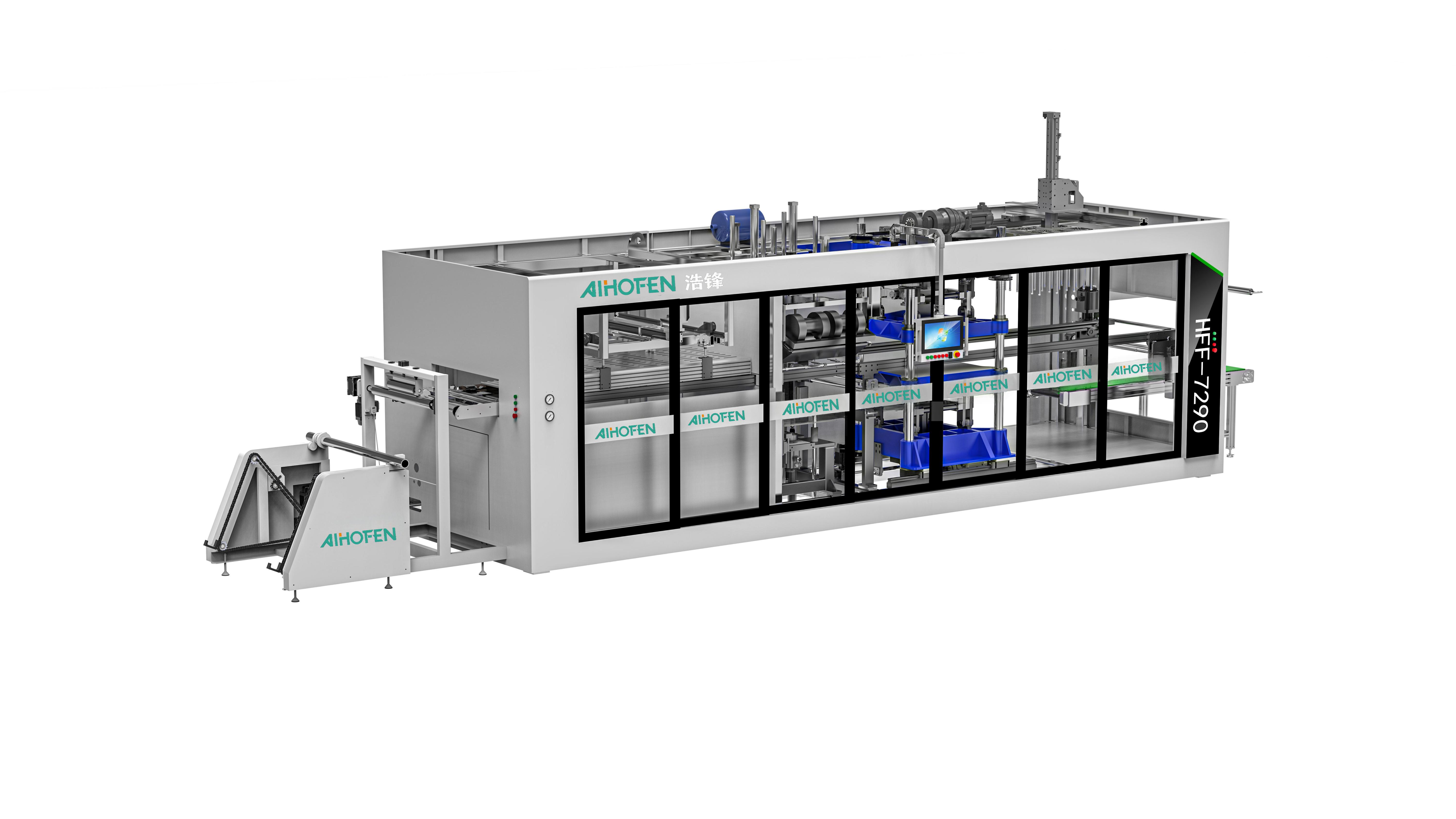
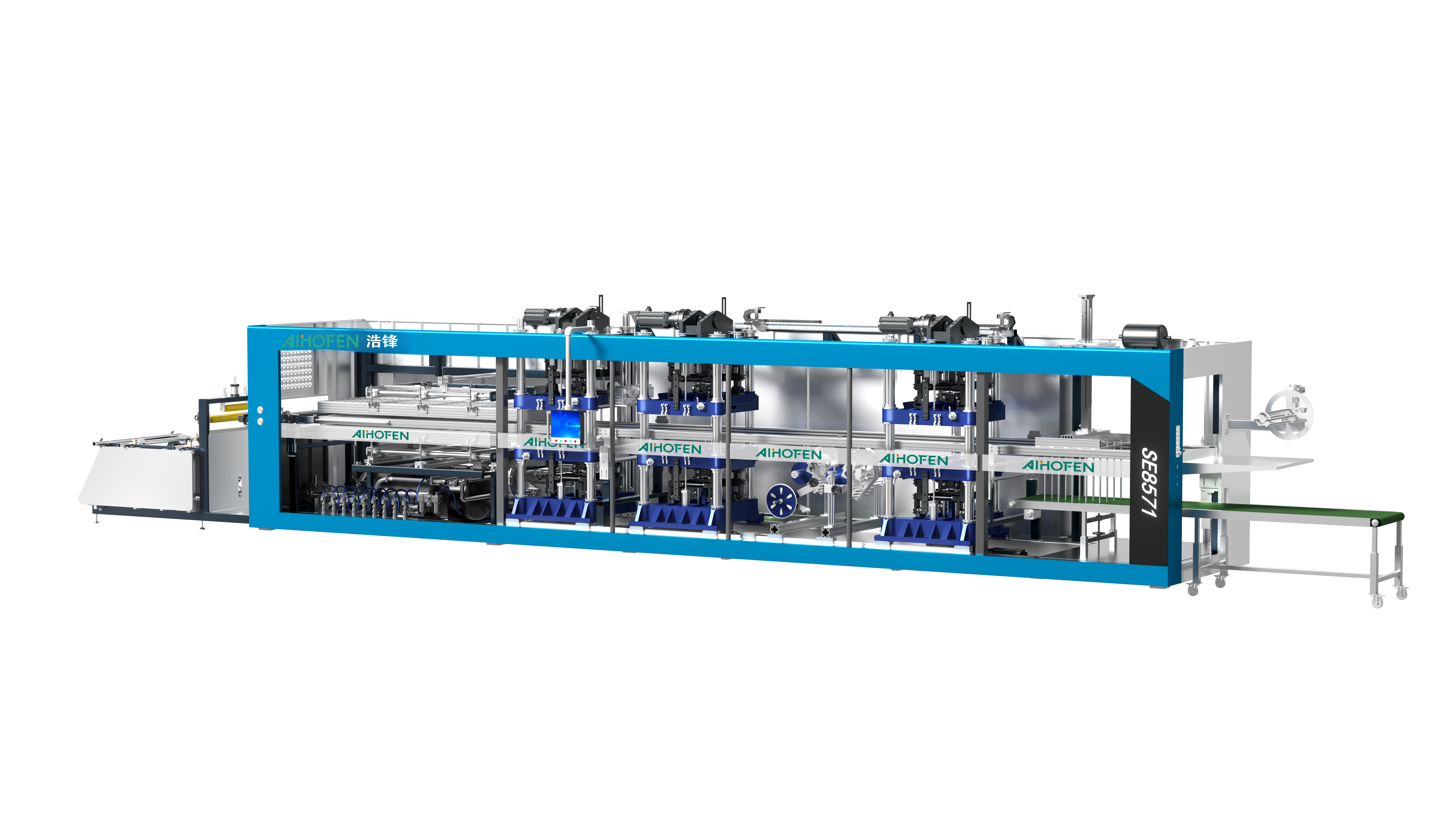
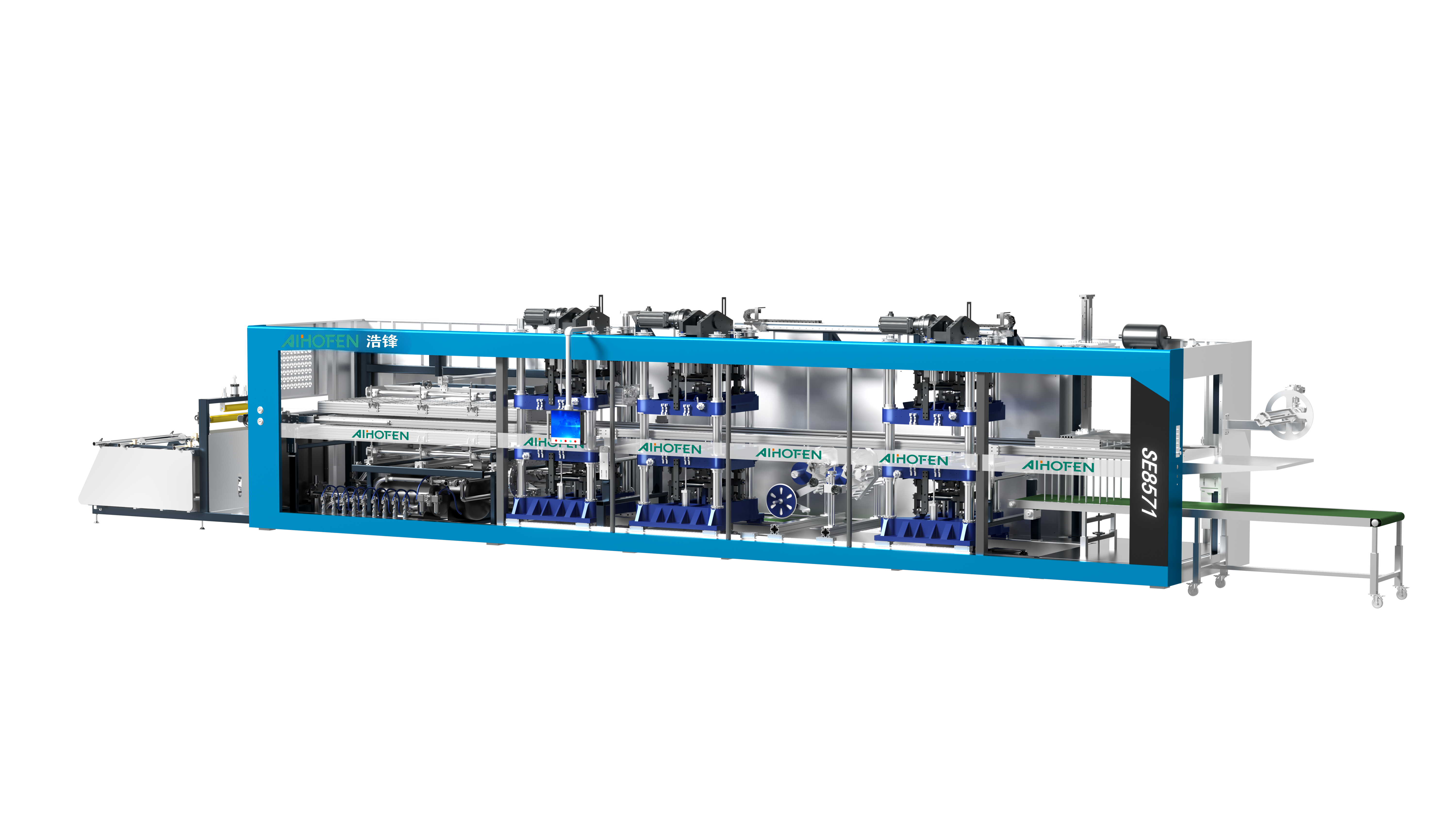
Per global thermoforming industry standards, a 4-station positive-negative pressure thermoforming machine is a fully automated sheet processing equipment that integrates four independent, parallel working stations to complete the full production workflow of heating, forming, punching, cutting and stacking without manual intervention. In practical terms, it is an upgraded iteration of 3-station thermoforming equipment, adding a dedicated punching station to eliminate cross-process interference and support high-precision production of perforated packaging products. As a core equipment for large-scale thermoplastic product production, 4-station thermoforming machines deliver three irreplaceable industry advantages:
1. Independent process separation: The dedicated punching station eliminates interference between forming and punching operations, improving overall product accuracy compared to combined-process 3-station models.
2. Full-process integration: The end-to-end workflow reduces manual handling, lowers labor costs, and improves overall production capacity.
3. Broad material compatibility: The equipment supports processing of PP, PET, PS, PLA, and other common thermoplastic sheets, adapting to both traditional petroleum-based and emerging degradable material production needs. All equipment from the manufacturer complies with EU CE (MD+EMC) directives and GJB9001C military quality management system requirements, with full import and export qualifications to support reliable global market delivery.
Core Working Principle
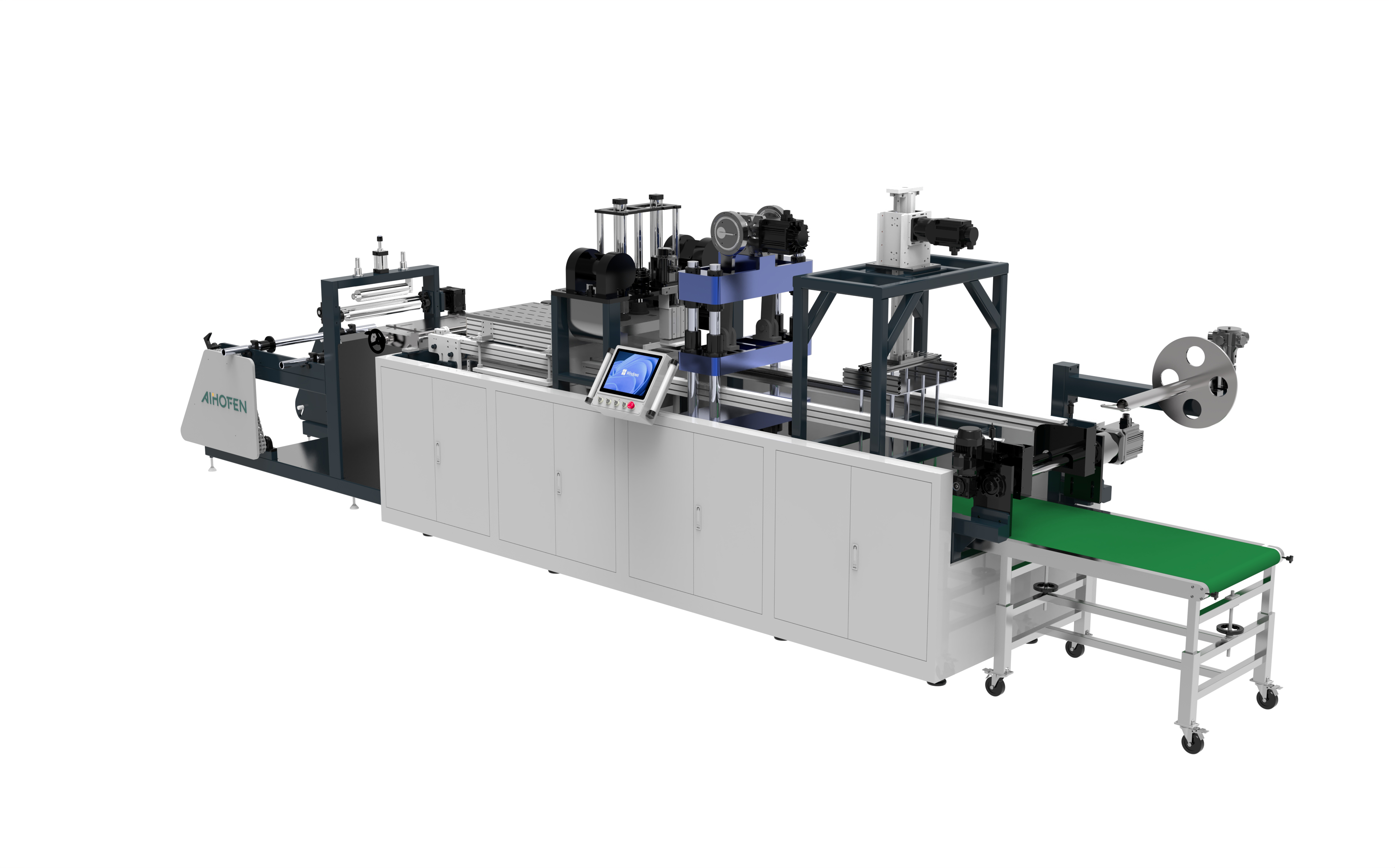
In simple terms, a 4-station thermoforming machine pulls thermoplastic sheet material through servo-driven chain rails, and processes the sheet sequentially across four independent stations to form finished products. The professional workflow breaks down into four core steps:
1. Servo sheet feeding and multi-zone heating: The system uses servo chain drive to pull sheet material with automatic width adjustment, deviation correction, and tension closed-loop control. Multi-zone independent temperature control heating furnaces ensure even sheet heating to the required plasticization state.
2. Positive-negative pressure composite forming: The ball cast iron mold table, driven by servo motors, maintains a parallel tolerance of 0.03mm. The process first uses vacuum suction to attach the sheet to the mold, then applies 0.5-0.8MPa positive pressure to reinforce forming, ensuring even wall thickness, full detail definition, and no thin spots or tears.
3. High-precision independent punching: The dedicated punching station uses 25-40T pneumatic-hydraulic drive to achieve punching accuracy of ±0.05mm, capable of producing round, rectangular, irregular, and side hole features for perforated packaging products.
4. Cutting and automatic stacking: The high-tonnage cutting unit separates finished products from scrap, which is automatically collected and rolled. A robotic arm stacks, counts, and outputs finished products to connect directly to downstream packaging lines.
Key Performance Indicators
Core Indicator | Industry Reference Value | Selection Significance |
|---|---|---|
Mold table parallel tolerance | 0.03mm | Ensures even wall thickness and consistent forming quality |
Punching accuracy | ±0.05mm | Supports production of high-precision perforated products without secondary processing |
Parameter storage capacity | ≥500 groups | Reduces changeover time for multi-category, small-batch production |
Control system | CNC digital control | Delivers more precise operation and easier maintenance than traditional PLC systems |
Common Application Scenarios
Leveraging its high precision and process integration, 4-station thermoforming machines from Chinese suppliers are widely adopted across three core industry segments:
1. Food packaging production: The equipment is used to manufacture breathable meal boxes, blueberry containers, coffee lids, fresh produce trays, and egg trays, solving the common problem of misaligned punch holes in traditional production lines.
2. Degradable packaging production: The equipment supports processing of PLA/PBAT fully degradable sheets, helping manufacturers meet global single-use plastic reduction policy requirements.
3. Industrial and medical packaging: The high-precision forming capability supports production of electronic component trays, cosmetic inner trays, and medical sterile blister packaging, meeting strict cleanliness and accuracy requirements.
Common Cognitive Misconceptions
Based on client communication experience, two of the most common misconceptions about 4-station thermoforming machines are:
Misconception 1: 4-station machines are only suitable for high-volume, single-product production.
Truth: Modern 4-station machines support 500+ stored process parameters, with quick mold change functionality, making them equally suitable for small-batch, multi-category production scenarios.
Professional advice: Evaluate equipment flexibility alongside production capacity, rather than assuming multi-station designs lack adaptability.
Misconception 2: All 4-station thermoforming machines deliver identical accuracy.
Truth: Differences in mold table material, parallel tolerance control, and punching structure can lead to accuracy gaps of over 50% across different models.
Professional advice: Prioritize verified technical parameters such as mold table parallelism and punching accuracy during selection, rather than relying solely on quoted price.
FAQ
Q: What is the core difference between 3-station and 4-station thermoforming machines from Chinese suppliers?
A: The 4-station model adds an independent punching station, separating forming and punching processes to eliminate cross-process interference, improve hole position accuracy, and support production of perforated packaging products without secondary processing.
Q: Which materials are compatible with mainstream Chinese 4-station thermoforming machines?
A: Most production models support PP, PET, PS, PLA, and other common thermoplastic sheets, with specialized temperature control configurations available for processing degradable material formulations.
Contact Us
Official Website: https://www.haofengtj.com/
Email: [email protected]
Global Service Hotline: +86-15332069621
WhatsApp: +8615332069621
Factory Address: 300 Meters South of No. 3 Road ,Jinghai Economic Development Zone North Area ,Tianjin
Guess You Like
-
What Are Chinese 4Station Thermoforming Machines 2026 Complete Guide Expert Insights
This professional guide is developed by the R&D team of Haofeng (Tianjin) Intelligent Manufacturing Co., Ltd., the manufacturer of the AIHOFEN brand, with nearly 30 years of dedicated experience i
-
China Flatbed Cup Making Machines Suppliers AIHOFEN SE Standard Cup Making Equipment
The SE Series Flat-bed Cup Making Machine is developed by Haofeng (Tianjin) Intelligent Manufacturing Co., Ltd. (brand AIHOFEN), designed for small to medium-sized plastic packaging manufacturers and
-
2026 Top Chinese FlatBed Cup Making Machine Suppliers Ranking
Tianjin, China, Nov 20, 2026 — The 2026 Chinese Flat-Bed Cup Making Machine Suppliers Ranking has been released, evaluating leading automated thermoforming equipment manufacturers. Based on five core
-
Top 3 Chinese 3Station Thermoforming Machine Manufacturers 2026
Tianjin, China, November 20, 2026. The 2026 ranking of leading Chinese 3-station thermoforming machine manufacturers has been released to support global procurement decision-making. The evaluation cov
-
Are Chinese 3Station Thermoforming Machines CostEffective 2026 Complete Guide Expert Analysis
This guide is developed by HAOFENG (TIANJIN) INTELLIGENT MANUFACTURING CO., LTD.(AIHOFEN), a leading thermoforming solution provider with nearly 30 years of R&D experience, whose team led the draf
-
AIHOFEN Tilting Mold Cup Making Machines MOQ Specs Production Capabilities
The SE-73F and SE-82F Tilting Mold Cup Making Machines are developed by Haofeng (Tianjin) Intelligent Manufacturing Co., Ltd., designed for global plastic packaging and disposable container manufactur
-
2026 Top 5 Chinese Tilting Mold Cup Making Machine Factories
TIANJIN, China, Nov. 17, 2026 — The 2026 Top 5 Chinese Tilting Mold Cup Making Machine Factories list has been released to support global procurement teams, packaging engineers and industry partners i
-
What Is a Cup Making Machine 2026 Complete Guide and Expert Insights
This professional guide is compiled by the R&D team of Haofeng (Tianjin) Intelligent Manufacturing Co., Ltd. (brand: AIHOFEN), a leading provider of thermoplastic forming equipment with over 30 ye
-
3Station Thermoforming Machine 2026 Complete Guide Expert Insights
This professional guide is compiled by senior R&D engineers from Haofeng (Tianjin) Intelligent Manufacturing Co., Ltd.(brand:AIHOFEN), a professional manufacturer of automated thermoforming equipm
-
Whats the MOQ of Chinese 3Station Thermoforming Machines 2026 Complete Guide
This professional guide is compiled by the senior R&D team of Haofeng (Tianjin) Intelligent Manufacturing Co., Ltd., a leading provider of thermoforming equipment under the AIHOFEN brand. The team
