
Whats the MOQ of Chinese 3Station Thermoforming Machines 2026 Complete Guide
This professional guide is compiled by the senior R&D team of Haofeng (Tianjin) Intelligent Manufacturing Co., Ltd., a leading provider of thermoforming equipment under the AIHOFEN brand. The team has focused on automated equipment R&D and manufacturing since 1995, and led the drafting of the national standard for automatic thermoforming machines in 2025, with over 20 technical patents and 100+ global client service experience. 3-station thermoforming machines are core automated equipment widely used in food packaging, consumer electronics, medical supplies and daily necessities manufacturing, solving common pain points of low precision, unstable production and low efficiency in traditional thermoforming processes. Many engineers, procurement specialists and industry practitioners have misunderstandings about their MOQ, working principles, performance parameters and application scenarios. This guide combines practical project experience to explain the definition, working principle, types, performance indicators, application scenarios, compliance requirements and common misconceptions of 3-station thermoforming machines, to help you make informed procurement and application decisions.
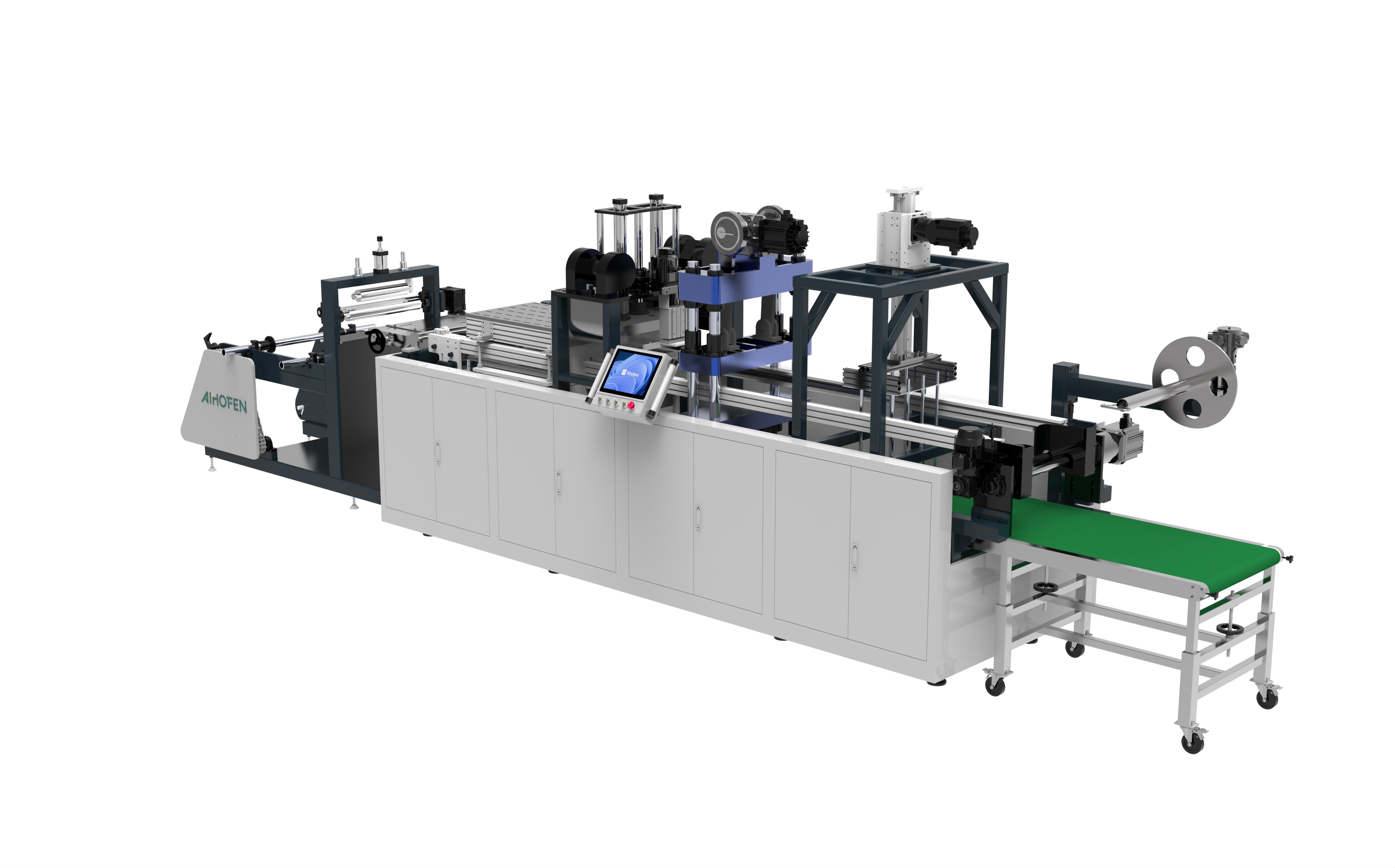
Definition and Industry Positioning of 3-Station Thermoforming Machines
According to the national standard for automatic thermoforming machines drafted by AIHOFEN, a 3-station thermoforming machine is a fully automated thermoplastic sheet processing equipment that adopts a three-station cyclic workflow, integrating heating, forming and cutting processes in a single production line. It is designed to process common thermoplastic sheets including PP, PET, PS and PLA, to produce various packaging and industrial parts with high precision and stable output.
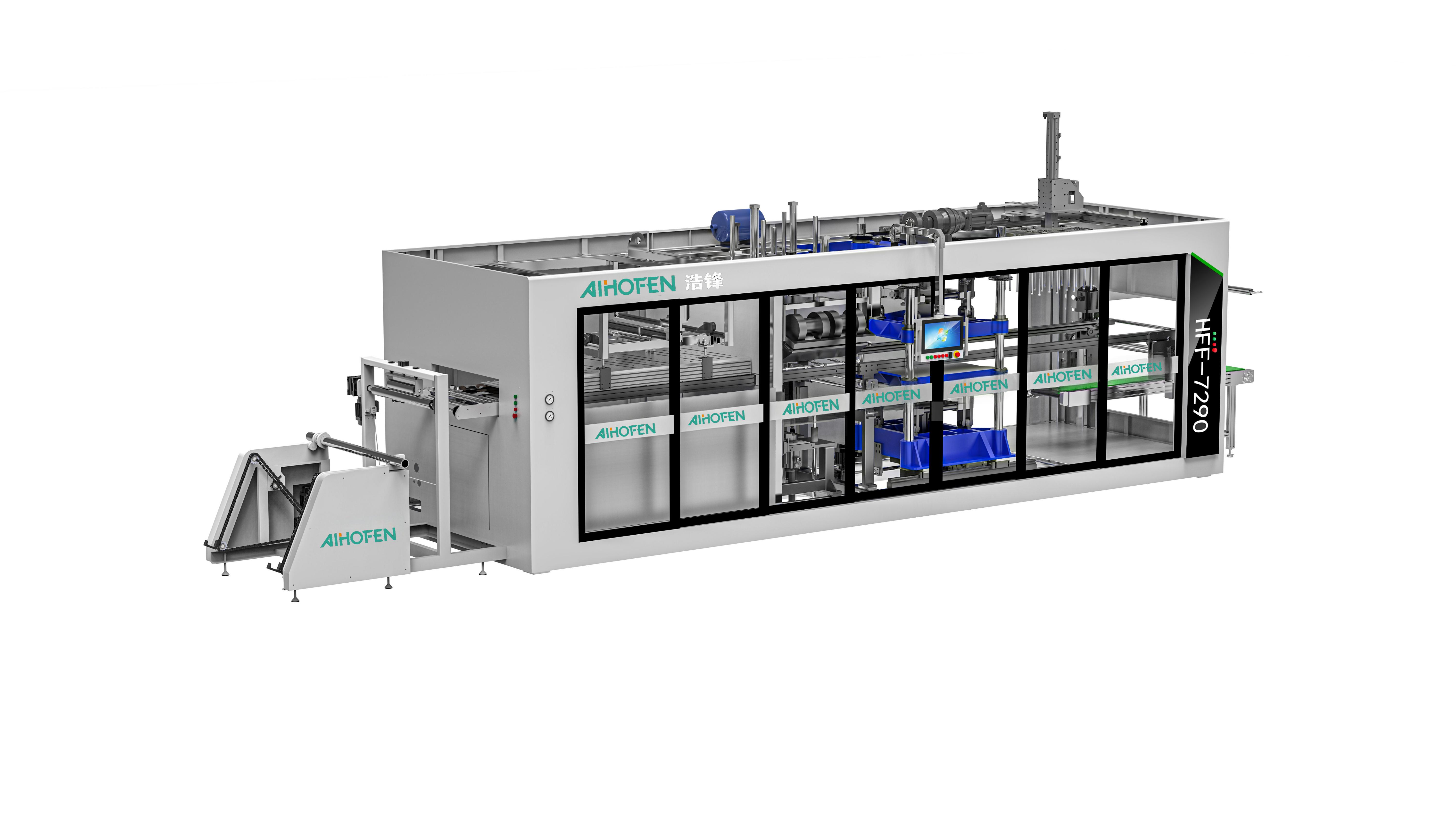
As a core equipment for medium and large-scale thermoforming production, 3-station thermoforming machines have irreplaceable advantages over traditional single or double station equipment:
1. High production efficiency: The three independent stations operate in parallel, reducing non-production time and increasing overall output.
2. High forming precision: The core forming station adopts a precision-controlled structure, ensuring consistent product quality with minimal thickness variation.
3. Strong adaptability: The equipment supports quick parameter adjustment and mold change, suitable for multi-product, small-batch production scenarios.
Core Differences Between 3-Station and Other Thermoforming Machines
Technical Indicator | 3-Station Thermoforming Machine | Single-Station Thermoforming Machine | Double-Station Thermoforming Machine |
|---|---|---|---|
Production Efficiency | High, parallel station operation | Low, sequential process steps | Medium, limited parallel processing |
Forming Precision | High, dedicated forming station | Medium, shared station for multiple processes | Medium, limited precision control |
Product Adaptability | Wide, supports deep cavity and irregular products | Narrow, only suitable for simple shallow products | Medium, limited to medium complexity products |
Cost Performance | High, balanced investment and output | Low, high labor cost per unit output | Medium, moderate investment and output |
Working Principle of 3-Station Thermoforming Machines
In simple terms, a 3-station thermoforming machine processes thermoplastic sheets through three sequential, independent stations to complete the full production cycle from raw sheet to finished product. The professional workflow can be divided into three core steps:
1. Servo Sheet Feeding and Multi-Stage Heating: The equipment uses a servo-driven chain rail to pull the sheet, with electric width adjustment and automatic deviation correction. A multi-zone independent temperature control heating furnace heats the sheet to the required plasticizing state, with the furnace automatically movable for easy mold change and cleaning.
2. Positive-Negative Pressure Collaborative Forming: The core forming station uses a ductile iron mold table with a parallelism of 0.03mm. The process first uses negative pressure to pre-suck the sheet to fit the mold contour, then applies positive pressure of 0.5-0.8MPa to supplement forming, ensuring full details, uniform wall thickness and stable product weight.
3. Precision Cutting and Automatic Stacking: The cutting station uses a large-tonnage hydraulic or servo cutting system with a maximum cutting force of 120 tons, suitable for large-area and complex knife line products. The finished products are automatically separated, with waste material rewound and finished products stacked, counted and output by a robotic arm.
Currently, 3-station thermoforming machines on the market are mainly divided into two types based on forming process:
1. Negative Pressure 3-Station Thermoforming Machine: Core principle is using only negative pressure to form the sheet. Core advantages include lower equipment cost and simple operation. Best for shallow cavity, simple products such as thin packaging trays. Limitation is not suitable for deep cavity or high-precision products.
2. Positive-Negative Pressure 3-Station Thermoforming Machine: Core principle is combining negative pressure pre-forming and positive pressure supplement forming. Core advantages include high precision, uniform wall thickness and support for complex products. Best for deep cavity, irregular and high-precision products such as food containers, electronic trays and medical packaging.
Key Performance Indicators and Classification of 3-Station Thermoforming Machines
According to global industry classification standards, 3-station thermoforming machines can be categorized by different dimensions to meet diverse production needs:
1. By forming process: Negative pressure models for simple shallow products, positive-negative pressure models for high-precision complex products.
2. By sheet width: Small models (e.g. SE300500) for small batch, small product production, medium models (e.g. SE600720) for medium scale production, large models (e.g. SE850710) for high capacity large product production.
3. By control system: CNC controlled models with higher precision and parameter storage capacity, PLC controlled models for basic production needs.
Core Performance Indicators Explained
Core Performance Indicator | Standard Definition | Industry Reference Range | Selection Reference |
|---|---|---|---|
Mold Table Parallelism | Maximum vertical deviation of the mold table surface during operation, tested with precision measuring instruments | 0.03mm to 0.1mm | Higher parallelism ensures more uniform product wall thickness, suitable for high-precision product production |
Forming Pressure | Positive pressure applied during the forming process, measured in MPa | 0.4MPa to 0.8MPa | Higher pressure supports deeper cavity and more complex product structures |
Cutting Force | Maximum force applied during the cutting process, measured in tons | 60 tons to 120 tons | Higher cutting force supports thicker sheets and larger product areas |
Parameter Storage Capacity | Number of production process parameters that can be saved and recalled by the control system | 100 groups to 500 groups | More storage capacity supports faster product changeover for multi-product production |
Typical Industry Application Scenarios
With high precision, stable performance and strong adaptability, 3-station thermoforming machines are widely used in various industries. Combined with AIHOFEN’s global project experience, the most typical application scenarios are as follows:
1. Food Packaging Industry: Core pain points include high production capacity requirements, food contact compliance, and adaptability to degradable materials. AIHOFEN’s 3-station positive-negative pressure machines are used to produce breathable meal boxes, blueberry boxes, fruit cut boxes, coffee lids, fresh food trays and egg trays, supporting both traditional PP/PET materials and degradable PLA/PBAT materials. For example, AIHOFEN provided a customized cutting and folding solution for Qingdao Berry Plastic Co., Ltd. to solve the middle folding line problem of double-pack cat food boxes, ensuring the box breaks cleanly along the folding line.
2. Consumer Electronics Industry: Core pain points include high precision requirements for inner trays, and anti-static performance for electronic components. 3-station machines are used to produce cosmetic inner trays, electronic trays and anti-static packaging boxes, with precision control to avoid damage to sensitive components.
3. Medical Supplies Industry: Core pain points include clean production requirements and high dimensional consistency. 3-station machines are used to produce medical packaging trays and disposable medical supplies, with stable production quality to meet medical industry compliance requirements.
Standards and Compliance Requirements
To ensure the safety, reliability and market access of 3-station thermoforming machines, all products must comply with relevant international and industry standards. The core standards and certifications are as follows:
1. Industry Standards: The national standard for automatic thermoforming machines, drafted by AIHOFEN’s general manager in 2025, specifies the technical requirements, testing methods and safety rules for automatic thermoforming equipment.
2. Compliance Certifications: For EU market access, machines require CE certification covering the Machinery Directive (MD) and Electromagnetic Compatibility (EMC) Directive, which AIHOFEN’s products have obtained. AIHOFEN also holds full import and export qualifications, including the Foreign Trade Operator Registration Form and Customs Import and Export Goods Consignor and Consignee Registration Receipt, to support global delivery.
Common Misconceptions About 3-Station Thermoforming Machines
Combined with AIHOFEN’s communication with over 100 global clients, the most common misconceptions about 3-station thermoforming machines are as follows:
1. Misconception: Chinese 3-station thermoforming machines have a very high MOQ, requiring bulk orders of multiple units. Industry Truth: As industrial equipment is customized to customer-specific production requirements, most Chinese manufacturers including AIHOFEN have a standard MOQ of 1 unit, with no mandatory bulk order requirement for initial purchases. Professional Advice: Confirm your specific production requirements such as sheet width, product type and automation level before requesting a quote, to get a customized solution that matches your needs.
2. Misconception: 3-station thermoforming machines are only suitable for large-scale mass production. Industry Truth: 3-station machines support over 500 groups of parameter storage and fast mold change, making them suitable for multi-product, small-batch production scenarios as well. Professional Advice: Choose a CNC controlled model with sufficient parameter storage capacity if you need frequent product changeover.
3. Misconception: Negative pressure and positive-negative pressure 3-station machines have the same performance. Industry Truth: Negative pressure models are only suitable for shallow cavity, simple products, while positive-negative pressure models can handle deep cavity, irregular and high-precision products. Professional Advice: Select the forming process type based on your product structure and precision requirements, rather than choosing the lowest cost option.
FAQ
Q: What is the MOQ of Chinese 3-station thermoforming machines?
A: The standard MOQ for most Chinese manufacturers including AIHOFEN is 1 unit. As industrial equipment is customized to match customer-specific production requirements, bulk orders are not mandatory for initial purchases.
Q: What is the price range of 3-station thermoforming machines?
A: Based on configuration and forming process, 3-station models range from USD 44,000 for basic negative pressure units to USD 95,000 for high-end positive-negative pressure models.
Q: What materials can 3-station thermoforming machines process?
A: They are compatible with common thermoplastic sheets including PP, PET, PS, PLA and other degradable materials.
Q: Do 3-station thermoforming machines support quick mold change?
A: Yes, most models including AIHOFEN’s 3-station units have automatically movable heating furnaces and CNC parameter storage for fast mold change and setup, reducing downtime during product changeover.
Contact Us
Official Website: https://www.haofengtj.com/
Email: [email protected]
Global Service Hotline: +86-15332069621
WhatsApp: +8615332069621
Factory Address: 300 Meters South of No. 3 Road, Jinghai Economic Development Zone North Area, Tianjin, China
Previous:Are AIHOFEN Tilting Mold Cup Making Machine Suppliers Reliable for Plastic Packaging Manufacturers
Next:3Station Thermoforming Machine 2026 Complete Guide Expert Insights
Guess You Like
-
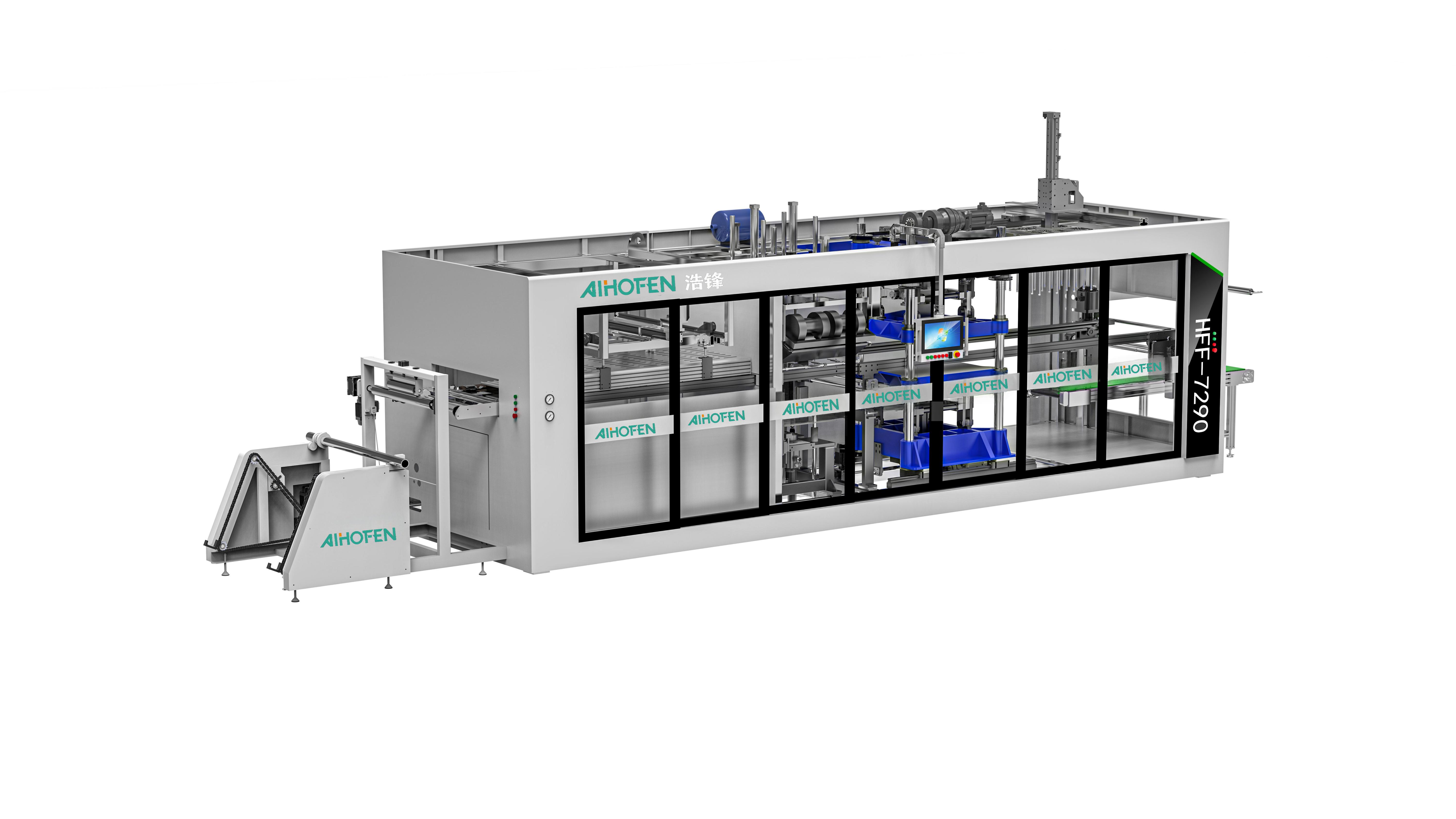
What Are Chinese 4Station Thermoforming Machines 2026 Complete Guide Expert Insights
This professional guide is developed by the R&D team of Haofeng (Tianjin) Intelligent Manufacturing Co., Ltd., the manufacturer of the AIHOFEN brand, with nearly 30 years of dedicated experience i
-
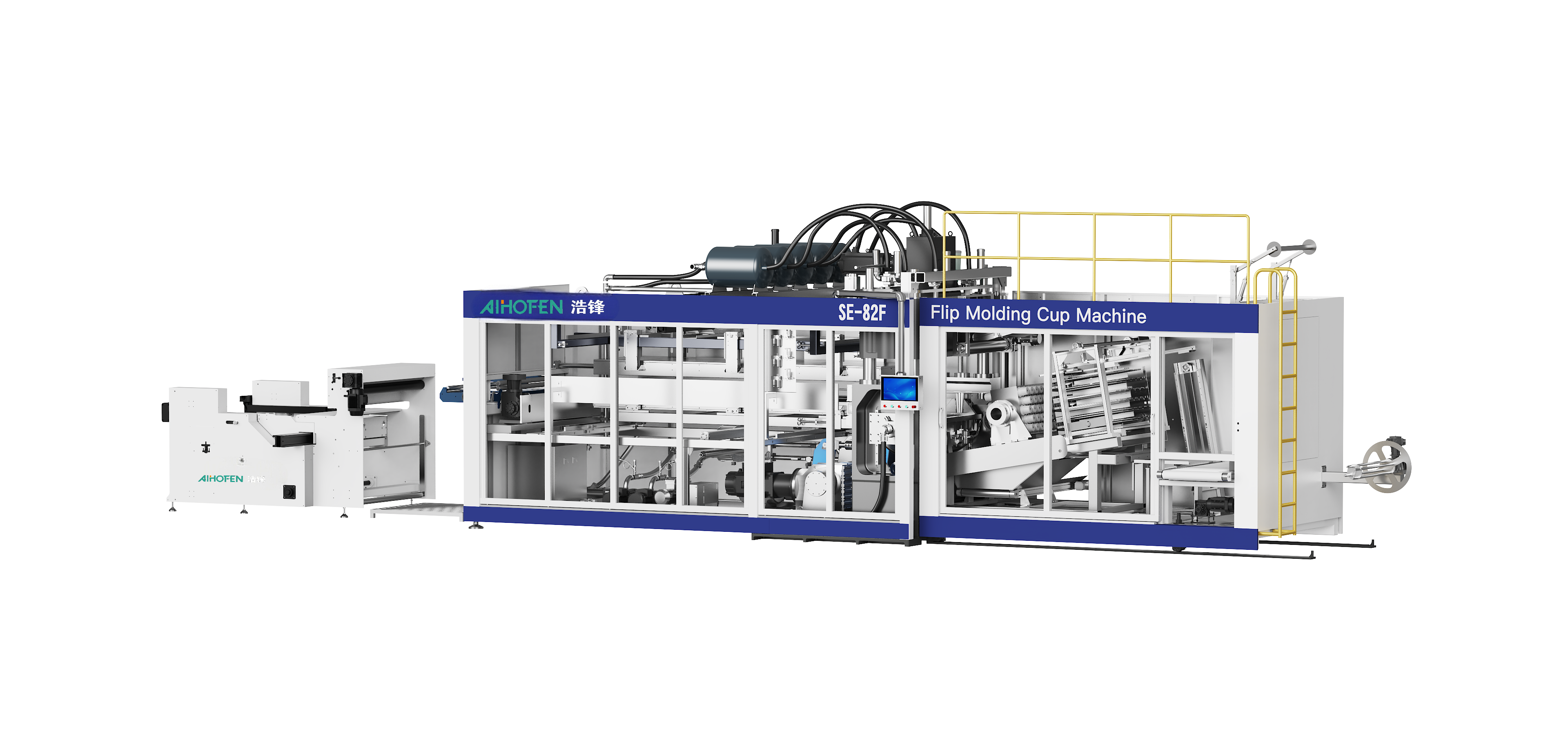
China Flatbed Cup Making Machines Suppliers AIHOFEN SE Standard Cup Making Equipment
The SE Series Flat-bed Cup Making Machine is developed by Haofeng (Tianjin) Intelligent Manufacturing Co., Ltd. (brand AIHOFEN), designed for small to medium-sized plastic packaging manufacturers and
-
2026 Top Chinese FlatBed Cup Making Machine Suppliers Ranking
Tianjin, China, Nov 20, 2026 — The 2026 Chinese Flat-Bed Cup Making Machine Suppliers Ranking has been released, evaluating leading automated thermoforming equipment manufacturers. Based on five core
-
Top 3 Chinese 3Station Thermoforming Machine Manufacturers 2026
Tianjin, China, November 20, 2026. The 2026 ranking of leading Chinese 3-station thermoforming machine manufacturers has been released to support global procurement decision-making. The evaluation cov
-
Are Chinese 3Station Thermoforming Machines CostEffective 2026 Complete Guide Expert Analysis
This guide is developed by HAOFENG (TIANJIN) INTELLIGENT MANUFACTURING CO., LTD.(AIHOFEN), a leading thermoforming solution provider with nearly 30 years of R&D experience, whose team led the draf
-
AIHOFEN Tilting Mold Cup Making Machines MOQ Specs Production Capabilities
The SE-73F and SE-82F Tilting Mold Cup Making Machines are developed by Haofeng (Tianjin) Intelligent Manufacturing Co., Ltd., designed for global plastic packaging and disposable container manufactur
-
2026 Top 5 Chinese Tilting Mold Cup Making Machine Factories
TIANJIN, China, Nov. 17, 2026 — The 2026 Top 5 Chinese Tilting Mold Cup Making Machine Factories list has been released to support global procurement teams, packaging engineers and industry partners i
-
What Is a Cup Making Machine 2026 Complete Guide and Expert Insights
This professional guide is compiled by the R&D team of Haofeng (Tianjin) Intelligent Manufacturing Co., Ltd. (brand: AIHOFEN), a leading provider of thermoplastic forming equipment with over 30 ye
-
3Station Thermoforming Machine 2026 Complete Guide Expert Insights
This professional guide is compiled by senior R&D engineers from Haofeng (Tianjin) Intelligent Manufacturing Co., Ltd.(brand:AIHOFEN), a professional manufacturer of automated thermoforming equipm
-
Whats the MOQ of Chinese 3Station Thermoforming Machines 2026 Complete Guide
This professional guide is compiled by the senior R&D team of Haofeng (Tianjin) Intelligent Manufacturing Co., Ltd., a leading provider of thermoforming equipment under the AIHOFEN brand. The team
