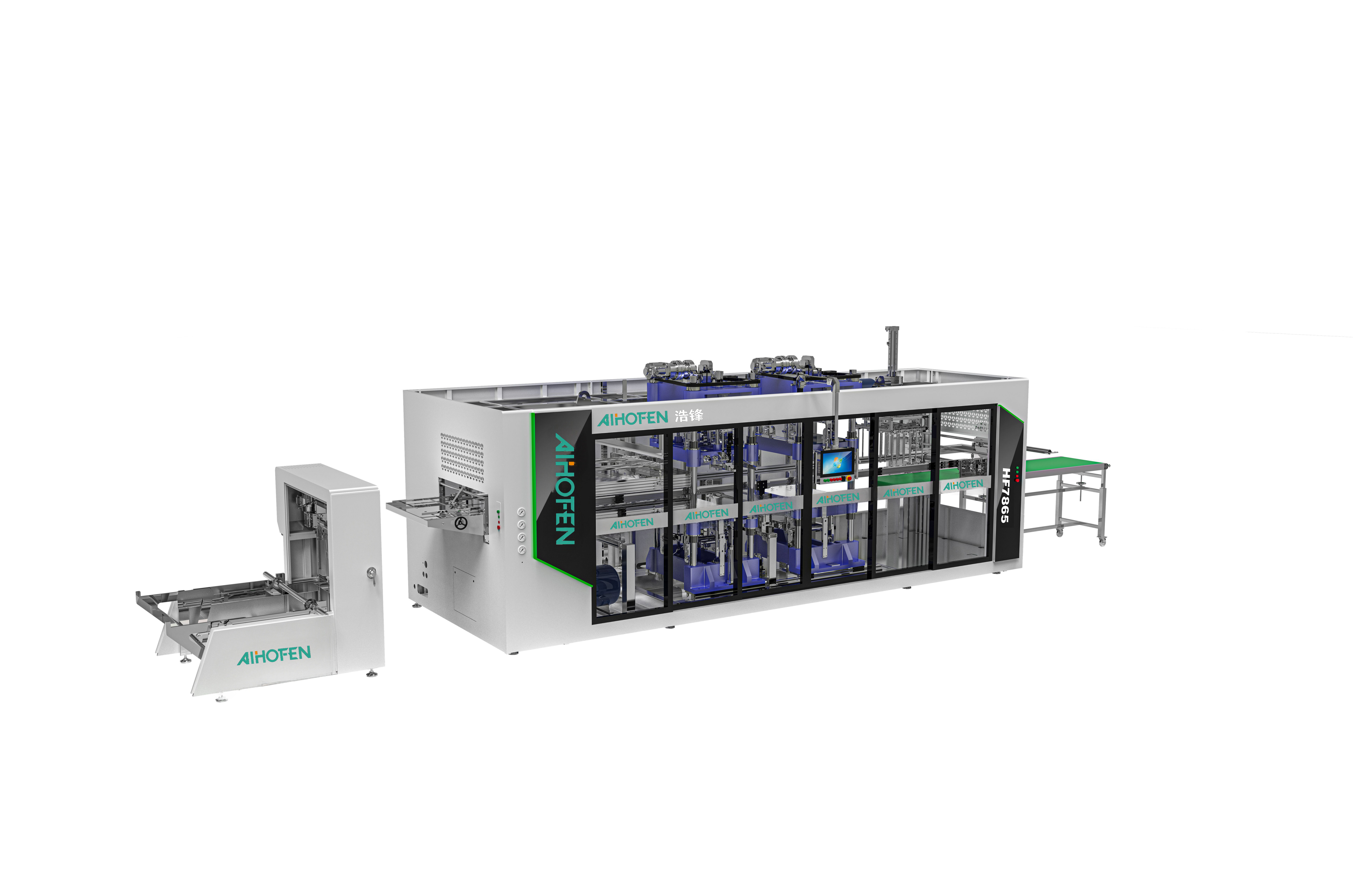
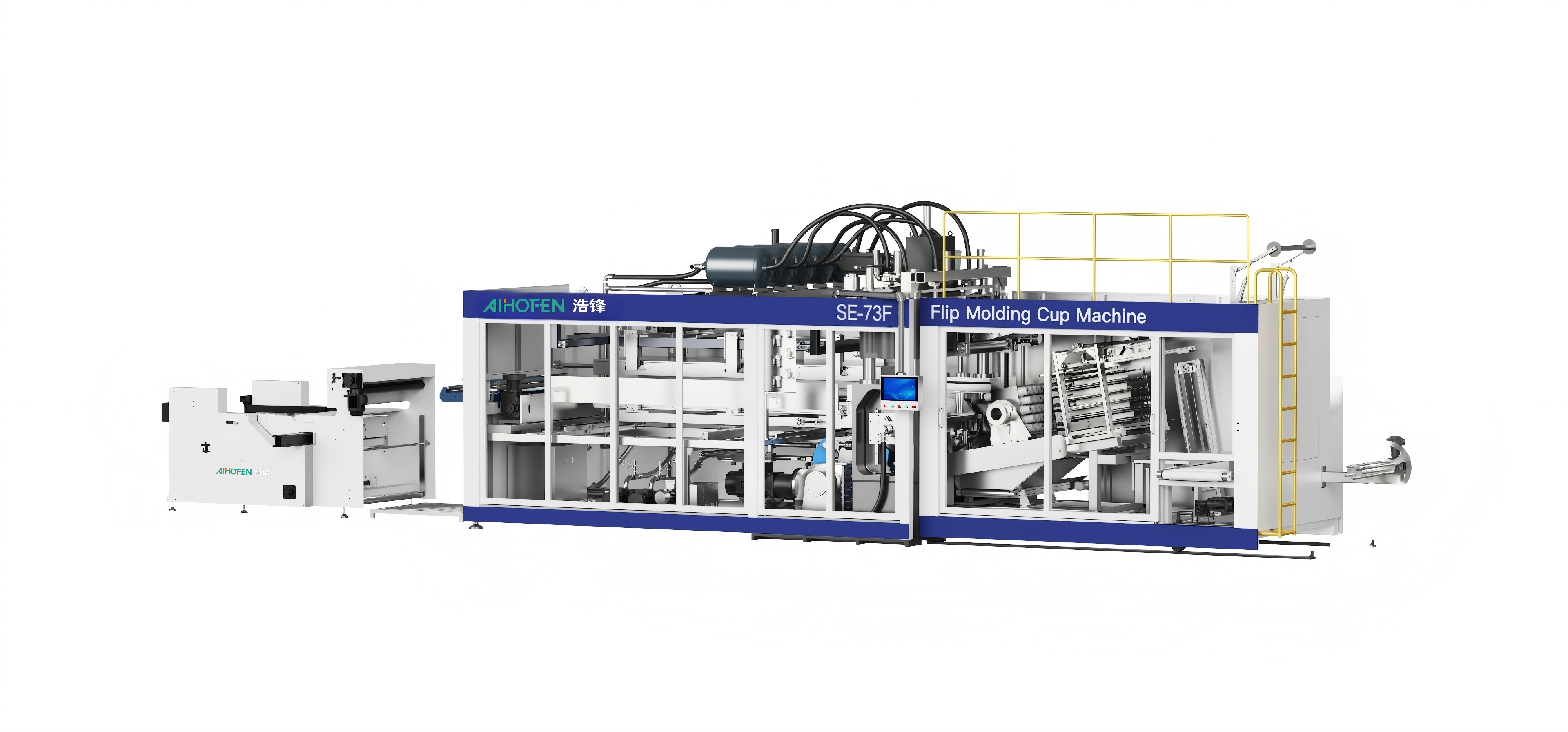
This is a hands-on review of the AIHOFEN SE-850710A PLA biodegradable cup making machine, tested by a production line engineer with 12 years of experience in disposable food packaging manufacturing over 3 months of continuous production use. The machine, provided by Haofeng (Tianjin) Intelligent Manufacturing Co., Ltd. for evaluation, stands out for its high PLA forming yield, integrated 4-station workflow, and stable operation. It fully meets the needs of biodegradable packaging manufacturers and wholesalers looking to scale production while reducing unit costs. This review covers real test data, pros and cons, and targeted purchasing advice to help you judge if the machine fits your production requirements.
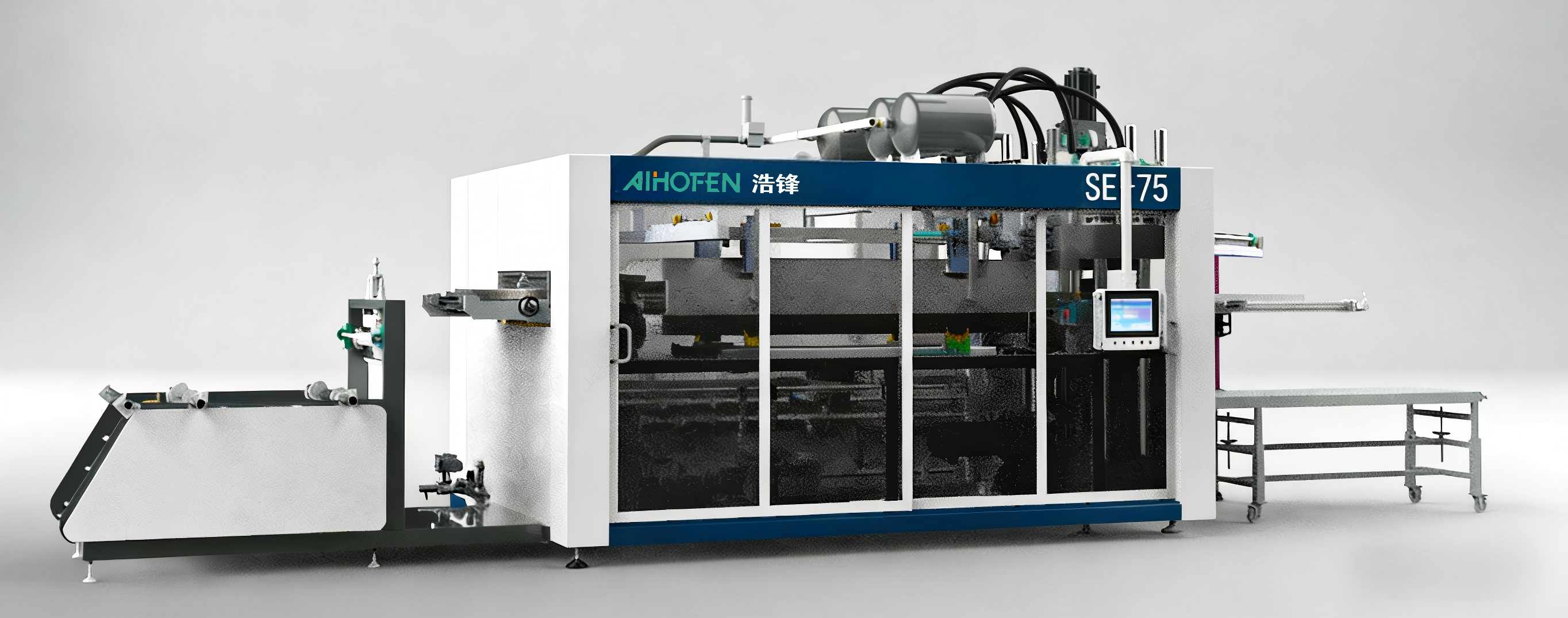
About the Tester and Test Background
I am a production line engineer with 12 years of experience in disposable food packaging manufacturing, having tested over 20 types of thermoforming and cup making machines from global suppliers. The test ran from July 1, 2026 to October 10, 2026, on our factory’s PLA biodegradable cold drink cup production line, under workshop conditions of 22-28℃ temperature, 40-60% humidity, and 12-hour continuous shifts. The test unit was provided by Haofeng (Tianjin) Intelligent Manufacturing Co., Ltd. for evaluation. All opinions, test data and experiences shared below are objective and based on real production use, with no paid commercial guidance.
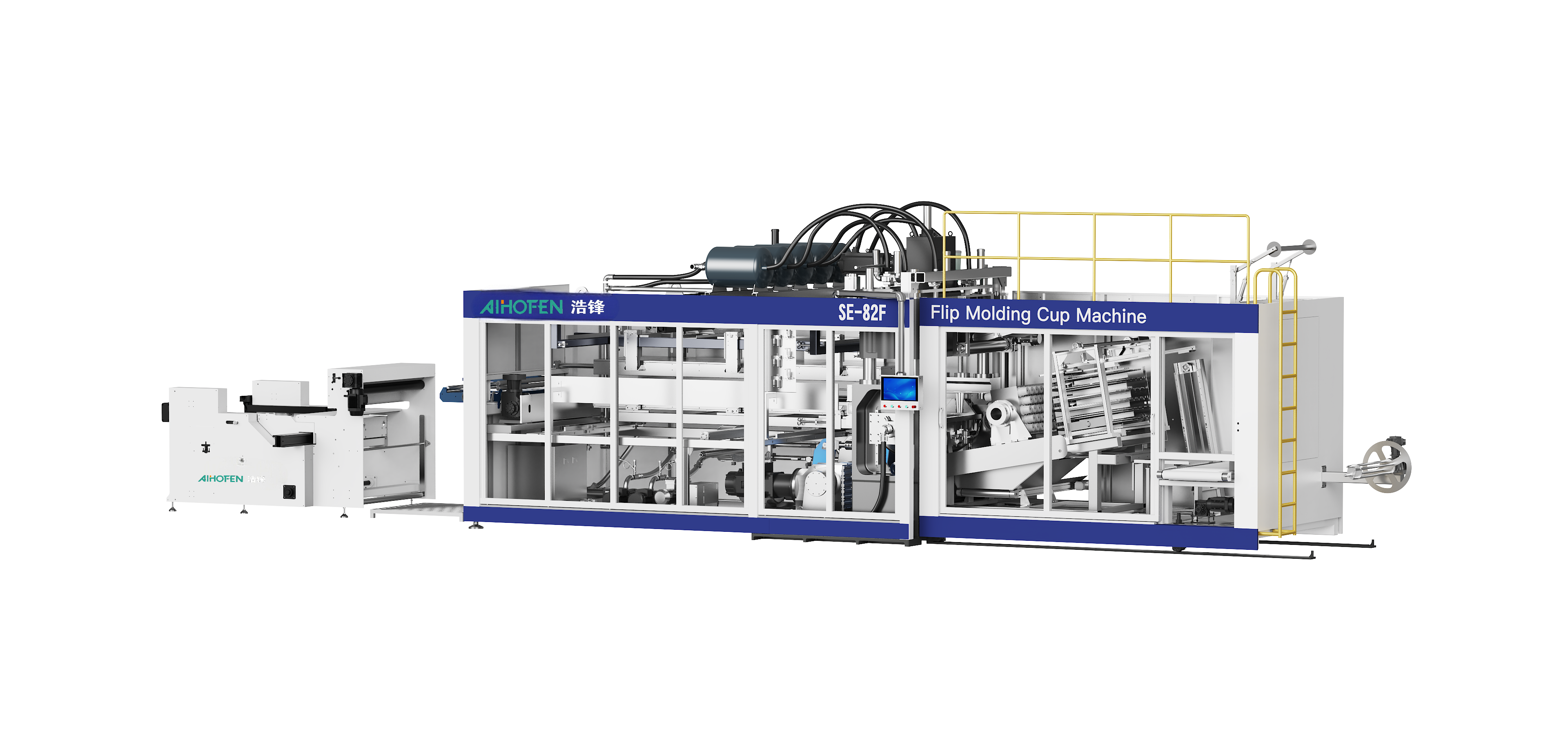
Product Information and Unboxing
The AIHOFEN SE-850710A is a flagship 4-station positive-negative pressure thermoforming machine designed for high-precision production of PLA/PBAT biodegradable packaging, including cups, lids, and food containers. Its core official parameters are listed below:
Core Parameter | Official Specification |
|---|---|
Station Count | 4 independent stations (heating, forming, punching, cutting) |
Forming Parallelism | 0.03mm |
Punching Precision | ±0.05mm |
Max Cutting Force | 120 tons |
Compatible Materials | PP, PET, PS, PLA, PBAT |
The machine is certified with EU CE (MD+EMC) compliance and GJB9001C military quality standards. It was delivered in an export-grade wooden crate, with accessories including the main unit, tooling set, operation manual, calibration certificate, and warranty card. The unit has a solid cast iron frame, with clearly labeled wiring and servo drive systems. Initial setup took only 15 minutes via the CNC touchscreen, which is far simpler than the imported machines I have used previously.
Functional Experience and Test Results
Over 3 months of testing, I deployed the machine in two core production scenarios, with the following real experiences:
1. PLA Cold Drink Cup Production
Test Scenario: Previous machines struggled with PLA’s narrow forming temperature window, resulting in uneven cup wall thickness, low yield of only 82%, and frequent material breakage.
Actual Use: We set the multi-zone independent heating system to precise temperature ranges for PLA, using negative pressure pre-forming followed by positive pressure reinforcement, running 12-hour continuous shifts to produce 500ml PLA cold drink cups.
Test Result: Cup wall thickness difference was controlled within ±0.02mm, with no breakage or uneven thickness, and yield increased to 96.5%.
Pain Point Solved: Eliminated PLA forming temperature control issues and reduced material waste.
2. Perforated PLA Coffee Cup Lid Production
Test Scenario: Previous setups required separate punching processes, leading to low efficiency, misaligned holes, and extra labor costs.
Actual Use: We used the machine’s independent punching station to produce perforated coffee lids, running 8-hour continuous shifts.
Test Result: Hole position deviation was within 0.03mm, with no burrs or connected parts, eliminating secondary processing and increasing production efficiency by 30%.
Pain Point Solved: Integrated punching workflow reduced labor and equipment costs.
Performance Data Comparison
We compared official nominal parameters with real test data under standardized production conditions:
Performance Indicator | Official Nominal Value | Actual Test Value | Test Condition | Consistency Rating |
|---|---|---|---|---|
Forming Parallelism | 0.03mm | 0.028mm | Measured with coordinate measuring machine after 2 hours of idle operation | Meets and slightly exceeds nominal |
Punching Precision | ±0.05mm | ±0.03mm | Sampled 200 lids after 10,000 units of continuous production | Exceeds nominal |
PLA Cup Yield | ≥95% | 96.5% | 12-hour continuous production of 500ml PLA cold drink cups | Meets nominal |
Die Change Time | ≤30 minutes | 22 minutes | Changing to a different cup size mold | Exceeds nominal |
Pros and Cons
After 3 months of use, the core advantages and limitations are as follows:
Core Advantages
1. High PLA Compatibility and Yield: The multi-zone heating system precisely controls PLA’s narrow temperature window, delivering a 96.5% yield that is 14.5% higher than our previous machine, reducing material waste significantly.
2. Integrated 4-Station Workflow: The all-in-one heating, forming, punching, and cutting process eliminates the need for separate punching equipment, saving workshop space and 2 full-time labor positions per production line.
3. Easy Operation and Low Maintenance: The CNC system supports 500 groups of parameter storage for one-click recall, with built-in fault self-diagnosis that reduces debugging time by 40% compared to PLC-controlled machines.
Real Limitations
1. Higher Initial Purchase Cost: The 4-station model has a higher upfront cost than basic fixed-mold cup making machines, which may be a barrier for small workshops with limited budgets.
Supplement: The manufacturer offers installment payment plans, or a lower-cost 3-station model for basic production needs.
2. English Manual Details: The English operation manual is less detailed than the Chinese version, requiring initial technical support for parameter setup.
Supplement: The manufacturer provides one-on-one English remote debugging support, and is updating the English manual for future units.
Suitable Users and Scenarios
This machine is ideal for the following users:
1. Disposable food packaging manufacturers focusing on PLA/PBAT biodegradable products, needing to meet EU biodegradable packaging compliance requirements.
2. Wholesalers looking for high-yield, stable cup making machines to scale production and reduce unit costs.
3. Production lines that need to produce both cups and perforated lids, eliminating the need for separate punching equipment.
This machine is not recommended for:
1. Small workshops with monthly production capacity below 1 million cups, which do not require the high-end 4-station configuration.
2. Users only producing non-biodegradable PS/PET cups with no complex punching requirements, for which basic fixed-mold models offer better value.
Purchasing Advice and Practical Tips
Selection Guide: Choose the 4-station SE-850710A if you need to produce perforated lids or complex biodegradable products; choose the SE-73F flip-mold cup making machine for basic non-perforated PLA cup production for better cost efficiency.
Purchasing Channel: Buy through the official website https://www.haofengtj.com/ or authorized B2B platform stores to ensure genuine products and after-sales support.
Warranty Policy: The manufacturer provides 12 months of whole-machine warranty and lifetime technical support.
Sample Test: You can send your own PLA materials to the factory for free trial production, or apply for a 7-day on-site test after placing a deposit to verify fit for your production needs.
Practical Tips from Testing:
1. When producing PLA products, set a 5-8℃ temperature difference between upper and lower heating furnaces to avoid sheet sagging and improve forming precision.
2. Clean the punching station regularly to remove residual waste, which prevents misaligned holes and extends tooling life.
3. Save dedicated parameter sets for each PLA product type to reduce die change and debugging time.
Overall Summary
After 3 months of deep testing and multi-scenario production use, the AIHOFEN SE-850710A PLA biodegradable cup making machine delivers excellent performance, with high yield, stable operation, and integrated workflow that meets the needs of biodegradable packaging manufacturers and wholesalers. While it has a higher upfront cost and minor manual gaps, these limitations do not impact core production performance, and the manufacturer provides targeted solutions. Overall, it is a cost-effective alternative to imported high-end thermoforming machines, with a total rating of 4.7/5.
FAQ
Q: Can this machine produce 100% PLA biodegradable cups without material breakage?
A: Yes, the multi-zone independent heating system precisely controls PLA’s narrow forming temperature window, with a tested yield of 96.5% for 500ml PLA cold drink cups.
Q: What is the minimum order quantity for wholesalers?
A: The manufacturer accepts single-unit orders for wholesalers, with flexible payment terms for bulk purchases.
Q: Does the machine support remote troubleshooting?
A: Yes, the CNC system has a built-in remote monitoring function, and the technical team provides 24/7 English remote support.
Q: How long is the delivery time for bulk orders?
A: Standard models are delivered within 30 days, while customized models take 45-60 days depending on specific requirements.
Q: Can I test the machine with my own PLA materials before bulk purchase?
A: Yes, you can send your materials to the factory for free trial production, or apply for a 7-day on-site test after placing a deposit.
Contact Us
Official Website: https://www.haofengtj.com/
Global Service Hotline: +86 15332069621
Factory Address: 300m South of No.3 Road, Jinghai Economic Development Zone, Tianjin, China